
A used tow truck for sale can roll out of a repair shop with a clean inspection sheet and still be placed out of service at a DOT roadside check the same week. That is not a contradiction in the truck. It is a contradiction in what each inspection is built to measure.
A shop inspection is a maintenance review. A technician confirms that the truck’s mechanical systems – brakes, hydraulics, tires, lights, and fluids – work and are roadworthy at the moment of service. A DOT roadside check is an enforcement event. A certified officer confirms that the vehicle, its configuration, and its driver meet federal safety rules and documentation standards at the point of operation.
The shop asks whether the truck works. The DOT asks whether the truck, as configured and documented, is legal on a public road. A truck can answer the first question perfectly and fail the second.
That gap matters most to buyers and fleet managers investing in a used tow truck, because the inspection that satisfies a shop is rarely the one that clears a weigh station.
The Shop Inspection: “Is This Truck Mechanically Functional?”
A technician does this work. The truck goes on a lift, and the brakes, hydraulics, winch, wheel-lift or underlift, lights, and frame are checked and measured against manufacturer and repair specs. The aim is to keep the equipment working and catch wear before it strands a driver on the shoulder.
Nobody enforces the result. The person running it is a technician, not an officer, and the standard is the spec sheet. There is no roadside penalty attached: a marginal component gets noted, scheduled, or fixed at the owner’s pace. That is why hidden rust, pivot-pin wear, and subframe issues can pass a routine tow truck inspection without raising a flag.
The DOT Roadside Check: “Is This Truck Legal Right Now?”
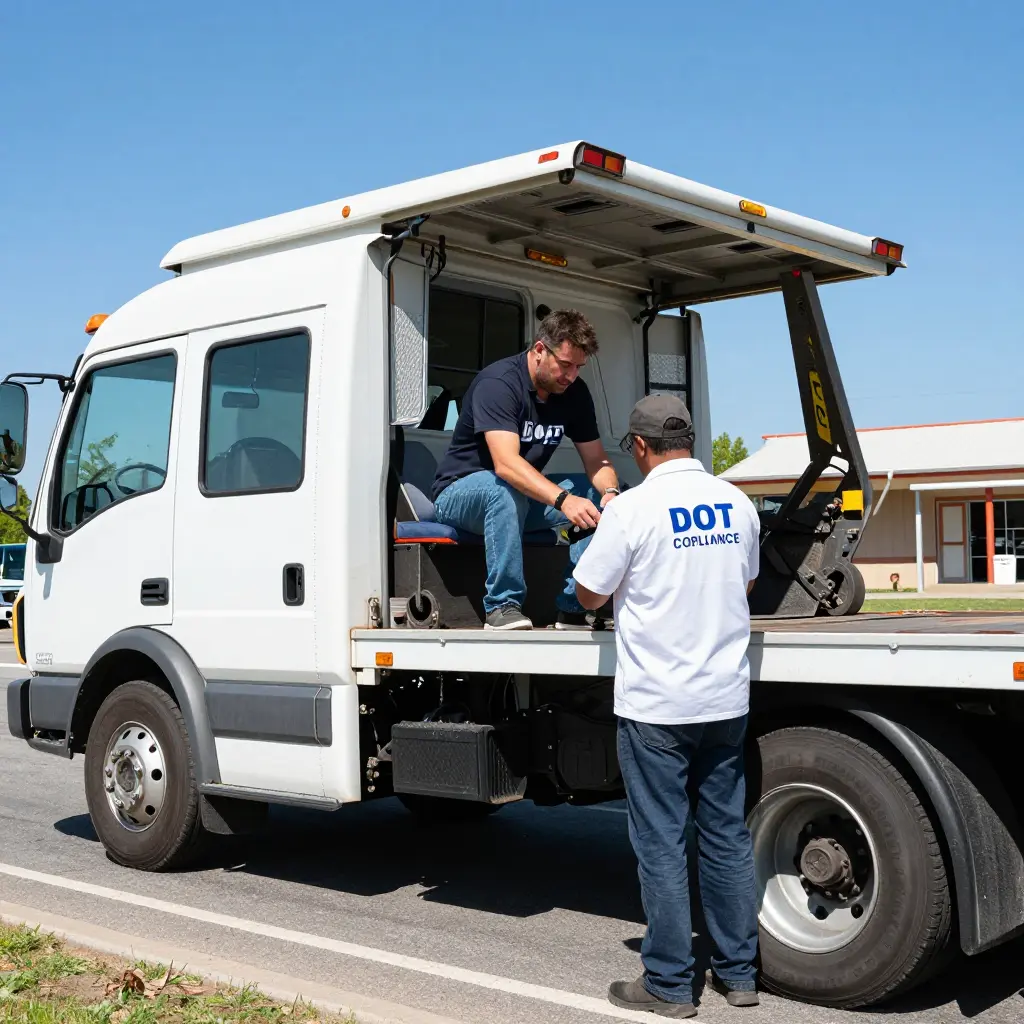
A DOT roadside inspection is regulatory enforcement, not repair. A certified inspector, usually a state trooper or motor carrier officer, works from the CVSA out-of-service criteria rather than a repair manual. The question is not whether the truck “works.” It is whether the vehicle is legal to operate on public roads at this exact moment. A cracked frame, low air pressure, a dead lamp, or a worn tire can trigger an out-of-service order on the spot and keep the truck parked until it is repaired and cleared.
Why the Two Verdicts Diverge
The shop inspection answers a mechanical question; the roadside check answers a legal one. A clean service record therefore says nothing about DOT compliance on its own. The table below sets out where the two frameworks part ways – a distinction worth understanding before buying used tow trucks for sale.
| Dimension | Shop Inspection | DOT Roadside Inspection |
|---|---|---|
| Who performs it | Certified mechanic or technician at a private repair shop | Uniformed DOT or state motor carrier inspector at the roadside |
| Primary purpose | Assess mechanical condition and identify needed repairs for the owner | Confirm real-time compliance with federal safety and operational rules |
| Governing standard | Manufacturer specs and the shop’s own checklist; state rules vary | Federal Motor Carrier Safety Regulations (49 CFR Part 396) and CVSA Out-of-Service Criteria |
| Focus areas | Brakes, fluids, tires, engine, hydraulics – only what the shop was hired to check | Brakes, lighting, coupling and securement, tires, load integrity, warning devices, driver credentials and hours of service |
| Failure consequence | A repair recommendation; the truck stays in service if the owner declines | An Out-of-Service Order; the truck is legally barred from moving until defects are fixed |
| Re-inspection requirement | Re-checked only if the owner chooses to repair | Must pass a follow-up inspection before returning to service; fines may apply |
| Cost and disruption | Predictable, scheduled shop labor cost | Unplanned downtime, fines, and possible loss of operating authority |
DOT Roadside Inspection Levels
FMCSA groups roadside enforcement into standardized inspection levels, so every state applies the same baseline when an officer stops a tow truck.
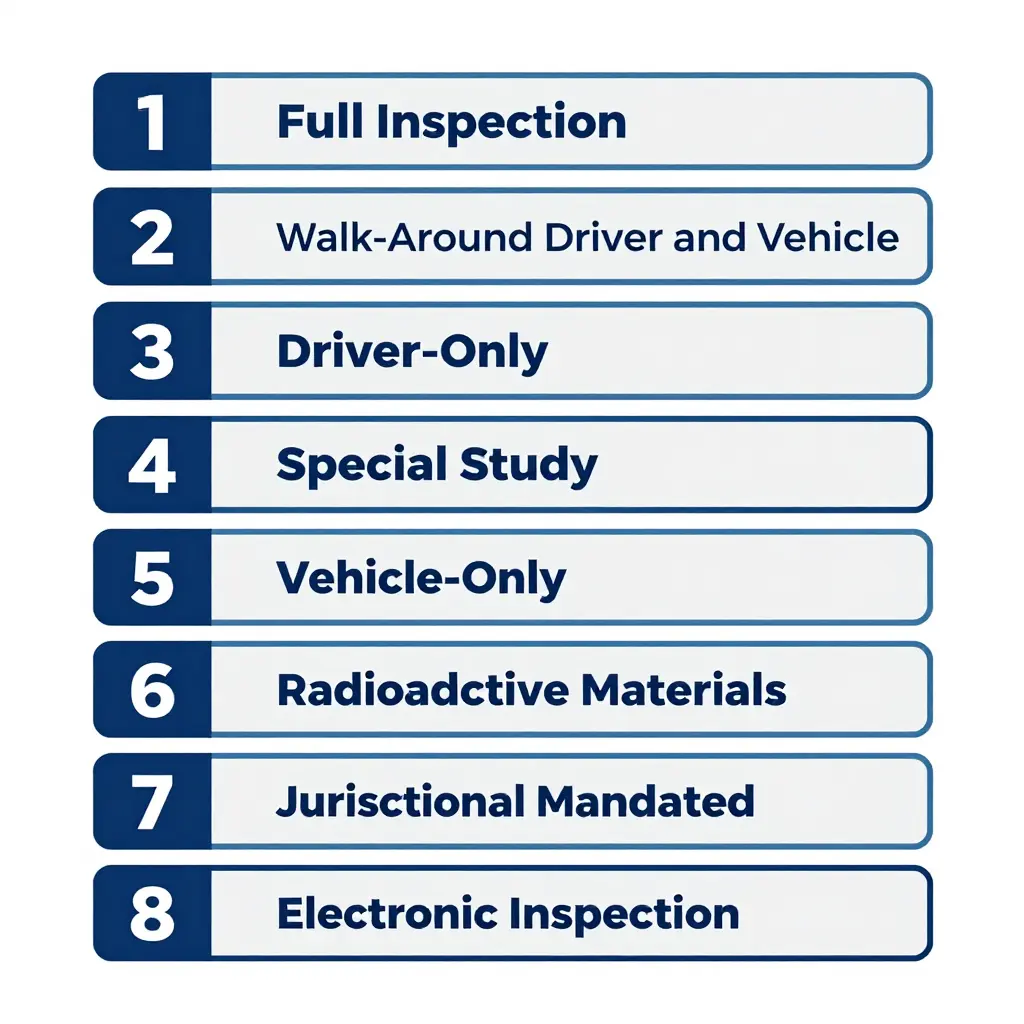
The Eight Levels at a Glance
The levels run from the most thorough to the most targeted:
- Level 1 – Full inspection of both the driver and the vehicle, including the undercarriage.
- Level 2 – Walk-around driver and vehicle inspection.
- Level 3 – Driver-only, focused on credentials and records.
- Level 4 – Special study, a one-time examination of a specific item.
- Level 5 – Vehicle-only inspection without evaluating the driver.
- Level 6 – Radioactive materials transport.
- Level 7 – Jurisdictional mandated, typically for hazardous loads.
- Level 8 – Electronic inspection drawing on onboard data.
What Inspectors Focus on in a Tow Truck
On a tow truck, the checklist emphasizes braking systems, lamps and reflective devices, tires, coupling devices, securement, and load integrity, plus the driver’s credentials and hours of service. Each item is scored against the same national standard, so a defect a shop logs as “monitor at next visit” can become an immediate violation at the roadside.
Out-of-Service Criteria, Not Repair-Shop Benchmarks
The out-of-service criteria decide the outcome. They set the exact defect thresholds that pull a vehicle or driver off the road immediately, and they are stricter than the tolerances many repair shops use to plan routine maintenance. A worn component can pass a shop’s practical judgment and still trigger an out-of-service order. For operators weighing used equipment, that gap is exactly why investing in tow trucks should include an honest estimate of how the unit would score at a DOT roadside check.
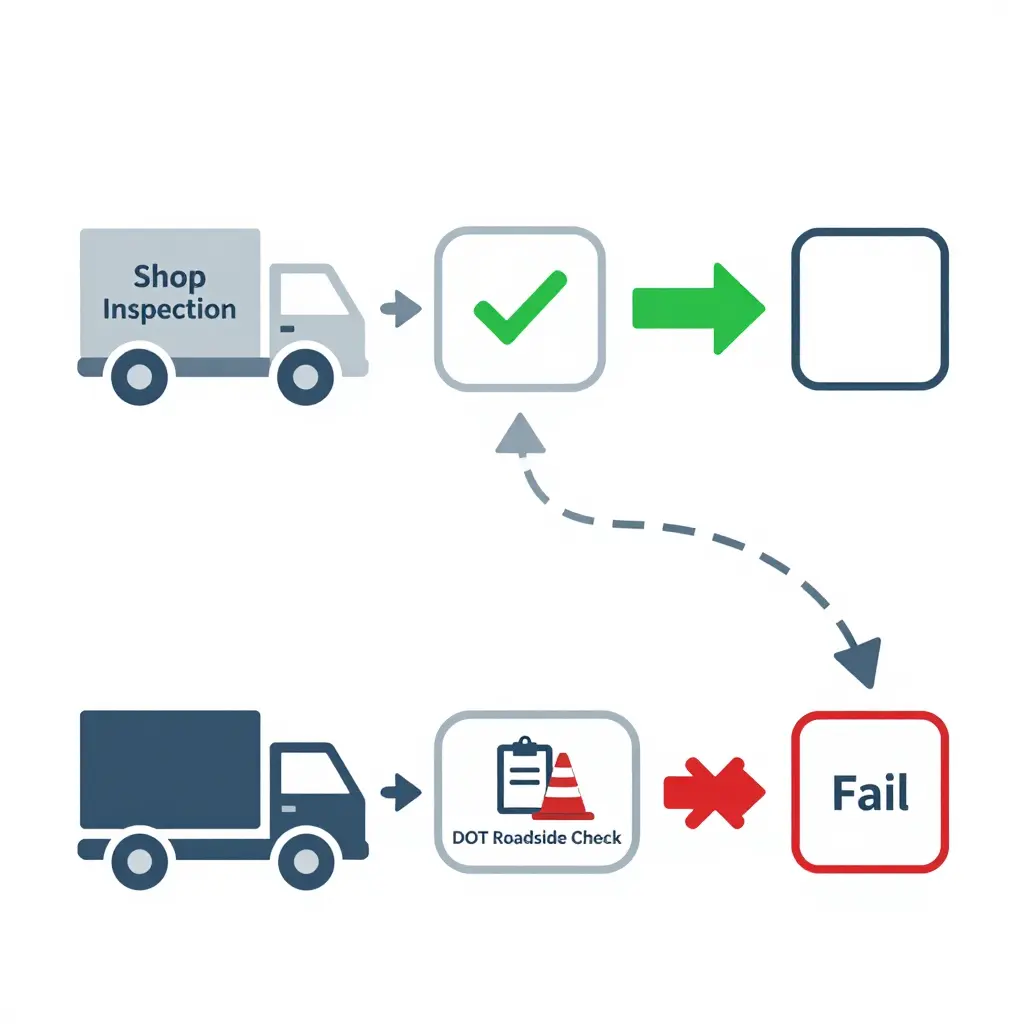
The diagram makes the split visible. The same truck runs down two independent paths: Path A measures it against a shop’s repair standards, Path B against the federal highway standards enforced on the road. Clearing the shop never pushes you onto the roadside check, and it never guarantees a clean result there either.
Pre-Purchase Compliance Checklist for a Used Tow Truck
Before you commit money to any used tow truck for sale, check the items road inspectors actually write up.
- Brake adjustment limits – Measure pushrod travel and slack adjuster stroke against the manufacturer’s spec. Over-stroked brakes can pass a shop glance and fail a roadside brake check.
- Tire tread and load rating – Check tread depth and even wear, and confirm every tire’s load rating matches the axle weight. Mismatched or recapped pairs hide easily under a fresh coat of paint.
- Lighting and reflectors – Make sure every clearance, marker, brake, and turn lamp lights, and that reflectors and conspicuity tape meet current visibility requirements.
- Winch and cable condition – Look for broken wires, kinks, and corrosion, check the drum and clutch, and unwind the line fully: a frayed cable is easy to wind out of sight.
- Wheel-lift and subframe integrity – Get underneath for cracked welds, rust, and worn pivot pins. These are the weak points where used truck listings tend to hide trouble.
- Coupling and securement devices – Test fifth wheels, pintle hooks, straps, and chains for wear, proper latching, and rated capacity so loads stay locked down in transit.
- DOT marking and placarding – Confirm the GVWR plate, USDOT number, and any required hazardous-material placards are present, legible, and correctly displayed.
- Documented maintenance history – Ask for service records on brakes, hydraulics, and past inspections to see how the previous owner treated the truck.
- Emergency and safety equipment – Check that fire extinguishers, reflective triangles, and a first-aid kit are present, working, and in date.
- Steering and suspension – Look for play in the steering box, worn tie-rod ends, and sagging springs that affect stability and axle loading.
Treat the list as a baseline, then have an independent technician verify anything that looks borderline before money changes hands.
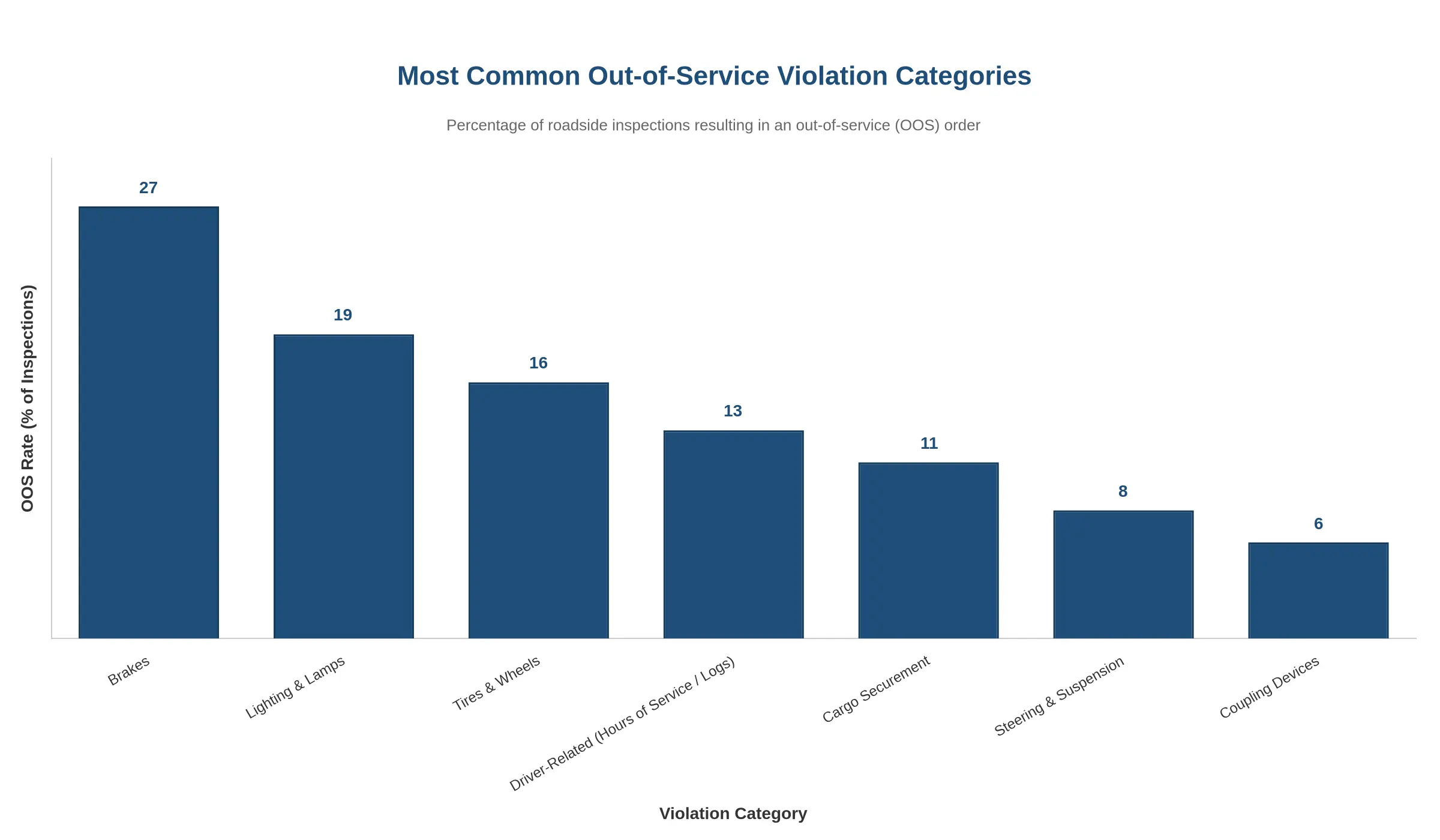
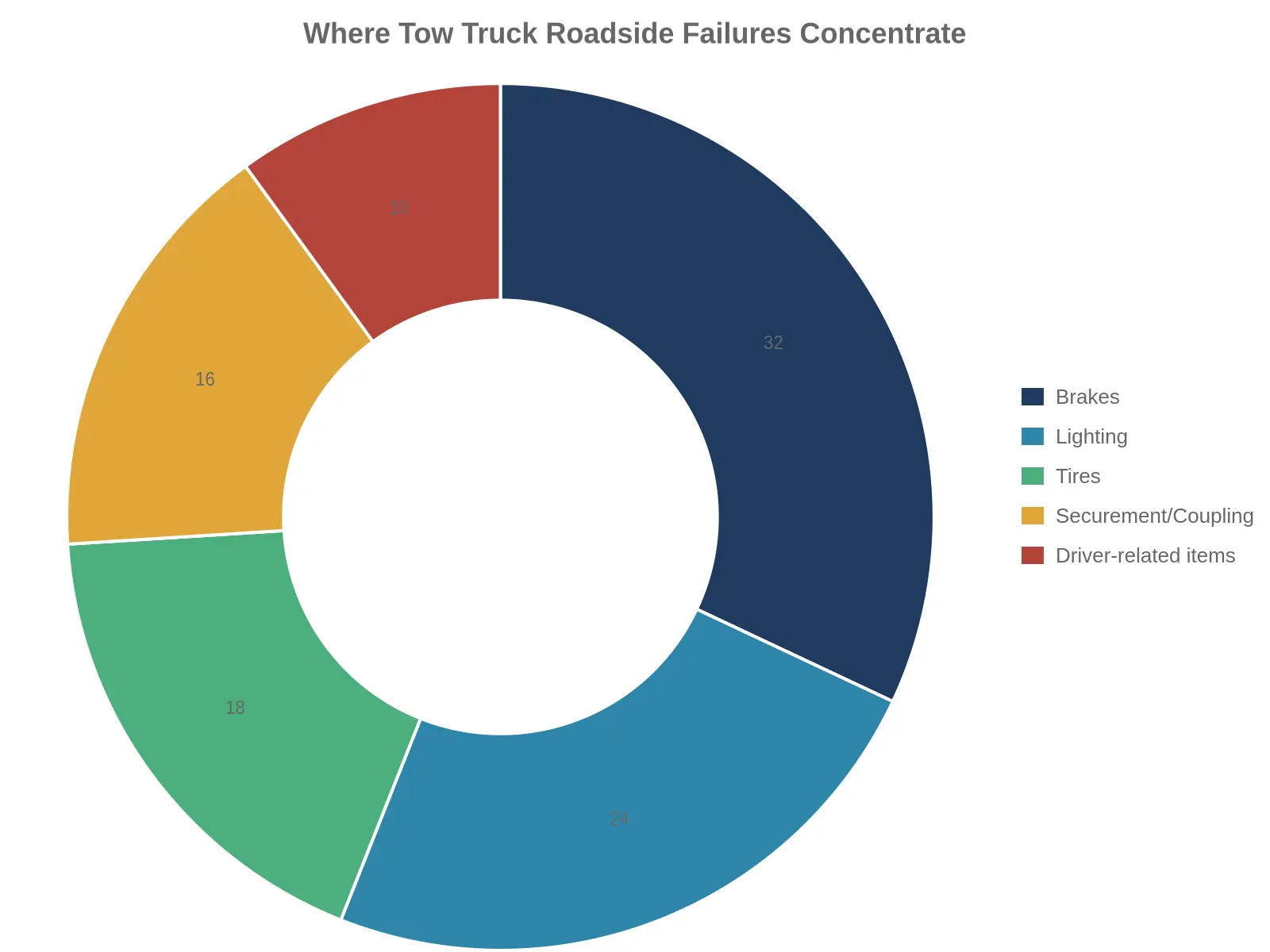
Most common out-of-service violation categories – failures cluster around a few predictable systems like brakes, lighting, and tires.
Why Shop Inspections Miss DOT Criteria
A passed shop check feels like a green light, but a standard shop visit and a DOT roadside inspection measure two different things. The gaps below explain how a truck can leave the lot running smoothly and still get flagged at the scale house.
Shops Verify Function, Not Regulatory Thresholds
A mechanic confirms the truck works: do the brakes stop it, does the engine start. That is a functional question, not a legal one. The out-of-service criteria care about exact numbers – brake stroke limits, pushrod travel, lining thickness, and air-loss rates. A truck can brake perfectly and still exceed a legal threshold, failing even though nothing feels wrong from the driver’s seat.
Documentation and Marking Requirements Go Unchecked
The roadside check also covers paperwork and markings a repair shop rarely touches: current annual inspection reports, operating authority details, USDOT numbers, and required reflective markings. None of these affect how the truck drives, so they stay invisible in a functional tow truck inspection and decisive on the roadside.
No Evaluation of Driver-Side Compliance
A shop inspects the vehicle, not the operation. Driver-side DOT compliance – hours of service, a valid CDL, a current medical card, a functioning ELD – never enters a mechanic’s report. A perfectly healthy truck can be placed out of service because the operator side is out of order.
No Consideration of CSA Scores
Shops do not think about CSA scores, but carriers live or die by them. Violations found at roadside feed directly into the CSA system and can raise insurance costs or trigger intervention. A shop inspection offers no visibility into that regulatory footprint.
Technicians Lack Enforcement Training
Mechanics are trained to repair, not to enforce. Most have never studied the inspection manual or the out-of-service criteria checklist, so they can unknowingly sign off on a defect an officer would flag immediately.
How a “Mechanically Fine” Truck Still Fails
A truck that drives smoothly can still be placed out of service over a brake stroke just past its limit, a cracked frame, a single dead lamp, or a chafed air line. Nothing is broken; the truck is simply non-compliant. A shop measures wear, while an inspector measures against a fixed legal standard. Before investing in a used tow truck, treat a passed shop check as a starting point, not proof of DOT compliance.
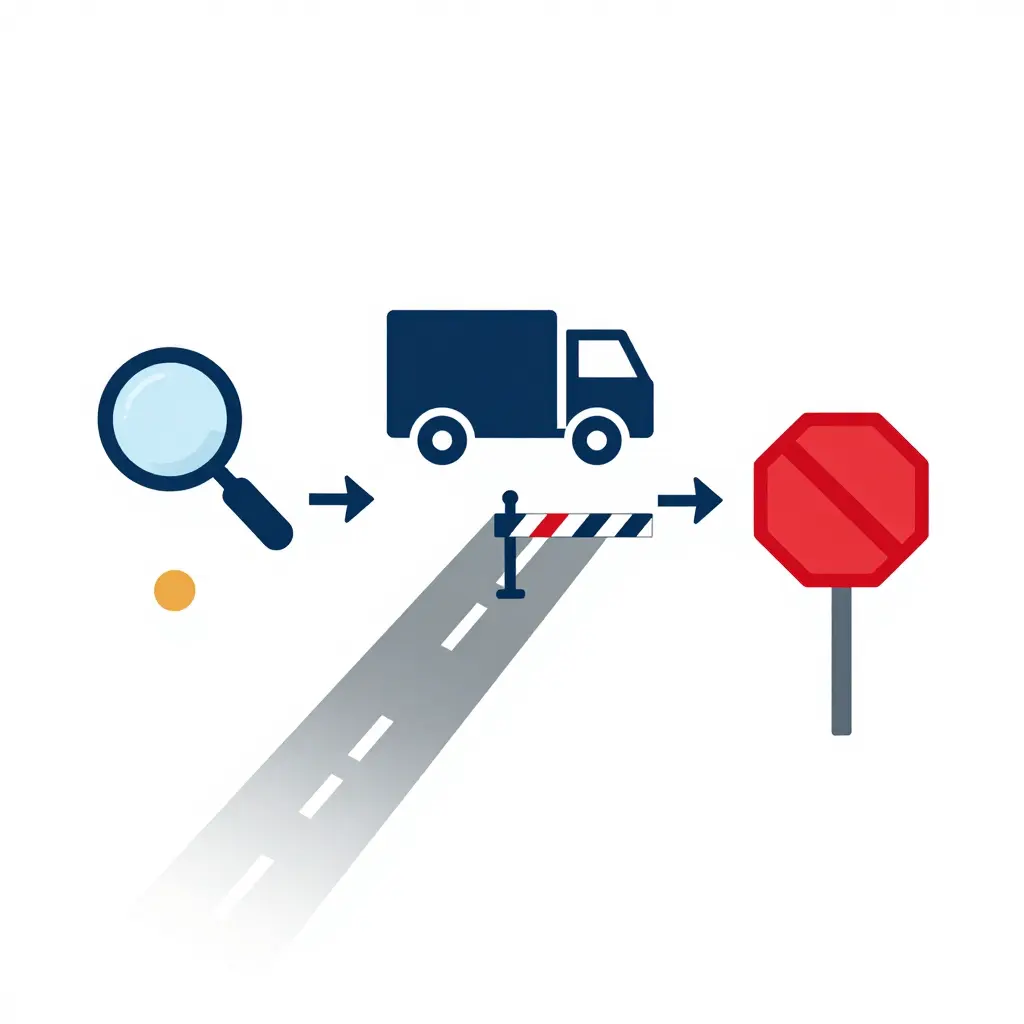
Figure: The silent failure chain. From a shop inspection that overlooks a defect, to the road, to the roadside checkpoint where the same issue becomes an out-of-service violation.
The Real Cost of a Failed DOT Roadside Check
A failed roadside check rarely ends with a warning. The costs stack up fast.
Downtime comes first. An out-of-service order sidelines the truck on the spot, which for a lean operation means lost calls, missed dispatch windows, and drivers sitting idle. In a larger fleet, one sidelined truck throws the whole rotation out of balance and forces you to turn away work you cannot afford to refuse.
Then the bills. Towing and repairs to clear a brake defect, faulty lighting, or a cracked subframe routinely climb into the thousands once you add the trip to the shop, replacement parts, and labor.
The CSA impact lingers longest. Every violation feeds your Compliance, Safety, Accountability score, and those points stay on your record for years. A rising score draws attention from insurers, who answer with steeper premiums or dropped coverage.
Contract loss is the quiet one. Many brokers and municipal partners screen carriers by CSA score before they sign a deal, so a single bad roadside result can quietly disqualify your operation from the accounts that keep revenue steady.
Most of these costs are avoidable. Serious due diligence on any used tow truck for sale – a third-party mechanical inspection, a full records and repair-history check, and a DOT-compliance review – catches dangerous defects long before they become roadside failures.
An honest pre-purchase review before you buy costs a fraction of what a single out-of-service order will cost you later.
The doughnut chart below shows how unevenly roadside failures fall across the truck. A handful of systems carry the bulk of the risk, which is why buyers who are investing in tow trucks should aim their pre-purchase attention at the categories that get written up most often.
Frequently Asked Questions About Tow Truck Inspections and DOT Compliance
Does passing a shop inspection guarantee passing a DOT roadside check?
No. A shop inspection reflects one mechanic’s judgment that the vehicle is roadworthy, while a DOT roadside check follows a federal checklist with hard pass/fail thresholds. A truck can leave the shop running well and still fail on something the shop never measured, such as an out-of-adjustment brake pushrod, a cracked lens, or missing reflective tape. The two inspections overlap, but only the roadside check enforces the exact regulatory limits inspectors apply.
How often must a tow truck pass a DOT inspection?
Under federal rules, most commercial tow trucks must pass a periodic inspection at least once every 12 months, and the inspection must be documented and retained on file. Many operators also run quarterly internal inspections, because a fresh annual sticker does nothing to protect you from a random roadside check later in the year. State rules can be stricter than the federal minimum, so confirm the interval that applies to your operating authority.
What happens if a tow truck is placed out of service?
An out-of-service order sidelines the truck immediately. You cannot legally drive it, and in most cases it must be repaired and re-inspected before it returns to service. The violation is recorded against your carrier safety record, which can raise insurance premiums and trigger a compliance audit. Repeated out-of-service orders can escalate into a conditional or unsatisfactory safety rating.
Can a buyer request a DOT-standard inspection before purchase?
Yes, and you should insist on it. Before committing to a used tow truck for sale, hire a third-party inspector to perform a full DOT-standard inspection covering brakes, lights, tires, steering, and coupling devices, and ask for the findings in writing. That protects you from inheriting hidden maintenance debt when you weigh the real value of investing in a used tow truck that would surface at your first roadside check.
Which systems most often cause an out-of-service result?
Brakes account for the largest share, most often through poor adjustment, air leaks, or worn linings. Lighting and reflective devices come next, followed by tires, wheels, and steering components. All of these wear over time, so a used truck that passes a routine shop visit can still fail on any of them at a roadside check.
How can buyers reduce the risk of a failed roadside check?
Verify current DOT compliance before money changes hands by reviewing the truck’s maintenance history, annual inspection reports, and any prior out-of-service records. Budget for a pre-purchase inspection and a brake adjustment check, and keep documenting inspections after delivery so you stay audit-ready.
Why a used tow truck for sale can pass a shop inspection but still fail a DOT roadside check
Shopping for a used tow truck for sale usually feels straightforward. The rig looks solid, your mechanic signs off on it, and you assume the risky part is behind you. Then a state trooper waves you in and hands you an out-of-service order even though nothing broke. A shop inspection and a DOT roadside check answer two different questions, and the gap between them is where careful operators lose money.
A shop inspection asks “does it work?” – not “is it legal?”
Your local mechanic keeps equipment running: the winch pulls, the brakes stop, the engine idles clean. The regulatory details that decide roadside outcomes rarely make the list. Even good diagnostic tools fall short here, as this look at why telematics data fails to catch early hydraulic pump failures shows: a functioning truck can still be quietly hiding compliance trouble.
That produces false confidence. Building machinery that survives roadside scrutiny starts long before delivery, which is why a reputable professional lifting specialist vehicle manufacturer designs DOT compliance into the chassis from day one instead of treating it as an afterthought.
What a DOT roadside check really inspects
Inspectors measure conformity, not performance: brake adjustment limits, tire tread depth, lighting and reflective tape placement, securement integrity, and driver records. A truck that drives beautifully can still fail on a single out-of-spec item, which catches plenty of first-time buyers off guard.
The failure points buyers consistently overlook
Rust and hidden structural wear are the quiet deal-breakers. Wheel lift pivot pins, subframes, and undercarriage corrosion rarely turn up in a quick walkaround, yet they are exactly what inspectors flag. Knowing where eBay tow truck listings hide rust, wheel lift pivot pins, and subframe damage matters before you commit a single dollar.
The fleet risk nobody budgets for
One failed inspection can sideline an entire schedule and turn a single bad truck into a fleet-wide problem. If your operation handles long-haul recoveries, it is worth reviewing why your business needs a semi tow truck and how the right platform spreads risk across the lineup instead of concentrating it in one aging rig.
Compare before you commit
Two seemingly identical flatbeds can differ by thousands for reasons that only surface at roadside. Understanding why two used flatbed tow trucks vary by $8,000 helps you see where the value and the risk sit before the inspection sticker seals your fate.
The takeaway
A clean shop inspection is a starting point, not a finish line. Treat DOT compliance as a separate checklist, verify the structural and regulatory details your mechanic never touches, and you will stop mistaking a running truck for a road-legal one.