
When a Listing Is Built to Sell, Not to Disclose
Most eBay tow truck listings are written to move inventory. Sellers choose the flattering angle, crop the frame that shows damage, and describe condition loosely enough to survive a return dispute. The mechanical problems that decide whether a used tow truck earns money or drains it stay out of sight until after the sale.
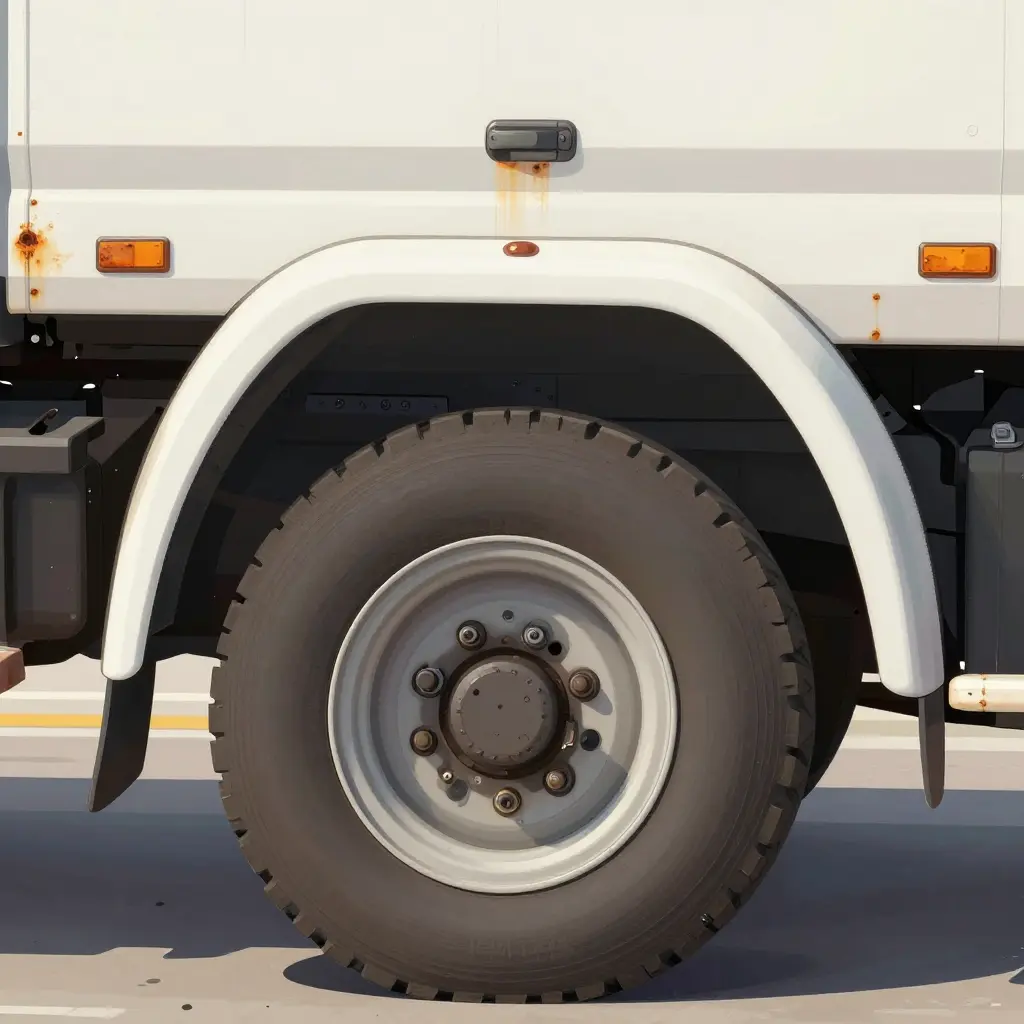
Rust is the easiest defect to conceal. Surface corrosion reads as harmless under dim light, while structural rot sits behind fender flares, undercoating, and fresh paint. Worn wheel lift pivot pins almost never make it into a photo, though they determine whether a wrecker lifts cleanly or fails under load. Subframe damage hides below the camera’s line of sight, covered by mud, oil residue, or a floor jack placed just so.
If you buy used tow trucks on eBay, the gap between the listing and the machine is where your money goes. A professional tow truck inspection closes it. Instead of the seller’s story, you work from your own checklist: where to probe, which photos to request, which questions to ask before any money changes hands.
This guide covers the three places eBay listings most reliably hide defects: rust, wheel lift pivot pins, and subframe integrity. Each section explains what fails, how it gets disguised, and what to check yourself.
Why Rust Is the Most Commonly Concealed Defect on an eBay Tow Truck
Sellers can hide rust more easily than almost any other defect, which is why it turns up so often on a used tow truck for sale and why it deserves the closest attention in an inspection. Mechanical problems announce themselves with noise, smoke, or a rough shift. Corrosion announces nothing. It grows where the camera never points, and by the time a buyer notices, the structural damage is done.
How rust actually develops on a working tow truck
Corrosion is a slow reaction between steel, oxygen, and water. Bare or thinly coated steel forms a small oxide layer, and that layer holds more moisture against the metal. A working tow truck repeats the cycle every shift: mud, rain, salt spray, and the flex of heavy loads. Seams, welds, and drain holes collect grit and water that never fully dry, so rust spreads from the inside out and stays under the paint until the panel or beam has already lost metal.
The components where rust does the most damage
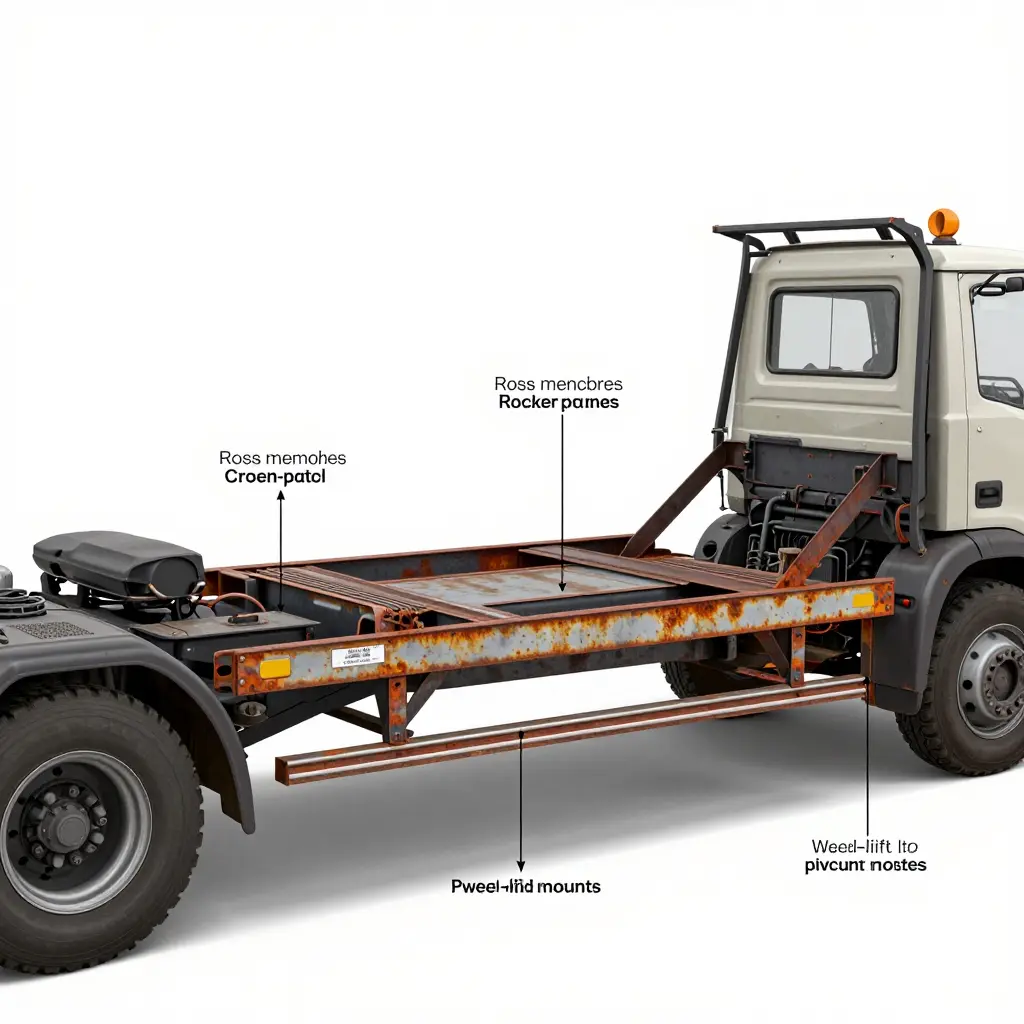
A scuffed fender is cosmetic. These structural and semi-structural parts carry the loads that keep a wrecker safe:
- Frame rails – The backbone of the truck; delamination and flaking here threaten everything the boom and wheel lift are mounted to.
- Cross-members – Thin, exposed, and frequently rotted where they meet the rails, weakening the entire chassis.
- Rocker panels and cab corners – Cosmetic on the surface, but the rot often extends into the cab floor and body mounts.
- Wheel-lift pivot mounts and outrigger brackets – High-stress attachment points where hidden corrosion can turn a routine lift into a failure.
- Underbody mounts, spring hangers, and fuel-tank straps – Easy to overlook and expensive to repair once a bracket lets go.
How sellers mask the problem
Masking rust does not require fraud, which is what makes it hard to challenge. The classic move is a fresh coat of undercoating, thick and rubberized, sprayed straight over active corrosion so the surface looks factory-clean. Sellers also touch up rockers and frame rails with color-matched paint, pack damp mud or grease into seams to hide flaking, and shoot only the glossy, photogenic angles. In many listings the frame rails never appear in a single photo.
Why climate and road salt speed everything up
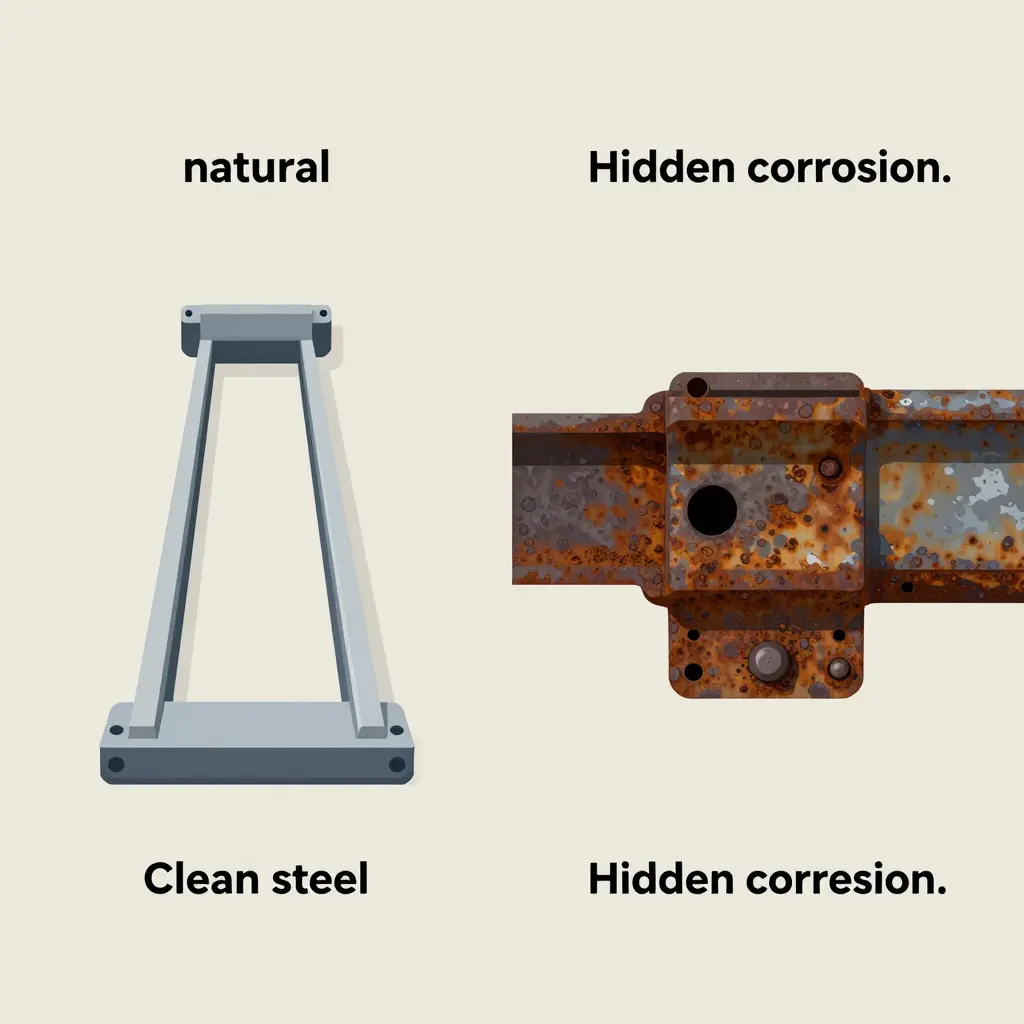
Environment multiplies the damage. A truck from a northern state, the coast, or a mountain region with heavy road-salt use corrodes far faster than one from a dry climate. Salt dissolves into the moisture on the steel, which keeps that water liquid below freezing, and because salt is hygroscopic it pulls more water out of the air. The corrosion reaction therefore keeps running long after the roads dry. A wrecker that spent its life on salted highways can carry structural rot that a garage-kept truck of the same age never develops, which is why history matters as much as the odometer.
Why photos almost never tell the truth
Auction photos are made to sell, not to document condition. Lighting hides pitting, JPEG compression flattens texture, and one flattering angle can skip the whole underbody. Even honest sellers rarely crawl underneath to photograph frame rails and cross-members. A listing with a perfect exterior and no underside shots is incomplete evidence, not proof of a clean truck.
How to request and interpret underside documentation
You can close most of the information gap before you bid. Ask for the documentation in writing, which also tells the seller you are serious.
| What to request | What it tells you |
|---|---|
| Underside and frame-rail photos in daylight | Reveals flaking, scale, and fresh undercoating |
| Close-ups of cross-members and spring hangers | Shows structural rather than surface corrosion |
| Wheel-lift pivot and outrigger mount shots | Exposes hidden stress-corrosion at load points |
| Any prior rust repair or welding records | Distinguishes patched metal from original steel |
| VIN history with salt-belt registration | Flags high-risk climate exposure |
When the photos arrive, read them for warning signs, not for a clean finish. Thick, uneven coating, paint that bleeds past a seam, or one area that looks suspiciously newer than the rest all deserve a second look. Dull, tight surface rust on an older truck is often fine. Deep pitting, flaking layers, and holes mean the structure has lost metal. If a seller will not send underside images, treat the refusal itself as a defect. For a fuller framework, see this guide to buying tow trucks on eBay before you commit to any purchase.
Rust-Prone and Failure-Prone Inspection Zones
Use this table to match the areas most often concealed on a used tow truck against what to verify in person and what is at risk if you miss it.
| Inspection Zone | What to Check | Why It Is Hidden in Listings | Risk If Overlooked |
|---|---|---|---|
| Frame rails | Flaking scale, deep pitting, and thin or soft metal along the full length; tap with a hammer for dead spots | Sellers photograph the cab, boom, and paint, not the underside where salt and battery acid collect | Weakened load path; a bent or cracked rail can fail under tow load |
| Underbody cross-members | Rot at welds and riveted joints; separation from the frame rail; cracks along the span | Sit behind the exhaust and fuel tank, so they rarely appear in photo sets | Deck flexing and sagging; sudden structural failure under load |
| Wheel lift pivot pins | Play in the pin, ovalized bores, dried grease, and cracks around the pivot boss | Pins are greasy and tucked beneath the lift arm, so listing photos skip them | A sheared pivot pin can drop the vehicle being towed |
| Subframe and mounting points | Weld condition, bolt torque, cracks, and corrosion around the subframe-to-frame mounts | Mounts hide above the rear axle and behind mud flaps | Subframe separation; loss of the boom or lift assembly |
| Hydraulic line routing | Chafing, leaks, kinks, and rusted fittings near heat sources and sharp edges | Lines run along the frame under the body, out of camera view | Sudden hydraulic failure, no lift or winch power, and fluid-related fire risk |
| Outrigger mounting zones | Weld and plate condition, bolt integrity, cracks, and corrosion at the outrigger feet | Mounts sit low and are often caked with mud, grease, and road grime | Outrigger collapse on soft ground and tipping during recovery |
Cross-check these zones against the seller’s photos and ask for close-ups of each before you commit. A truck can look sharp on top and be structurally spent underneath.
Worn Wheel Lift Pivot Pins
Wheel lift pivot pins are the load-bearing fulcrums that let the boom, grid, and crossbar assembly rotate, extend, and fold. They sit at the highest-stress joints in the lift system and carry the full weight of every vehicle you pick up. Grease and fresh paint make them easy to overlook, which is how they hide expensive damage.
Every lift works the pins two ways at once. The pin turns inside its bore as the boom pivots, then takes shear and shock as the vehicle’s weight settles onto the grid. Over thousands of lifts, that wears the pin diameter down and ovalizes the bore. Once clearance opens up, the boom rocks instead of holding a line and the grid no longer sits square to the frame.
A seized pin is as dangerous as a loose one. When grease fittings are blocked or missing, water and grit enter the joint, rust seizes the pin to the boss, and the load spreads into the surrounding steel. You end up with play, misalignment, and unsafe lifting: the boom drifts under load, the grid tilts, and the unit can shift or drop a vehicle mid-lift. On an eBay tow truck, that repair quickly runs into the thousands.
Pin-Wear Indicators to Investigate
- Irregular, stepped, or egg-shaped wear marks on the pin or inside the bore
- Visible up-and-down or side-to-side play when you rock the lift assembly by hand
- Heavy, gritty grease buildup that hides the joint and traps abrasive debris
- Missing, broken, or painted-over grease fittings that show skipped maintenance
- Rust bleeding or cracked weld collars at the pivot bosses
- Boom that will not hold a straight line under load
During an inspection, clean each pivot, wiggle the assembly, and confirm every fitting takes grease. If you are weighing a purchase, understand what used tow trucks for sale on eBay really reveal before you commit. Pins are cheap to service early and expensive to ignore.
What the Schematic Is Showing You
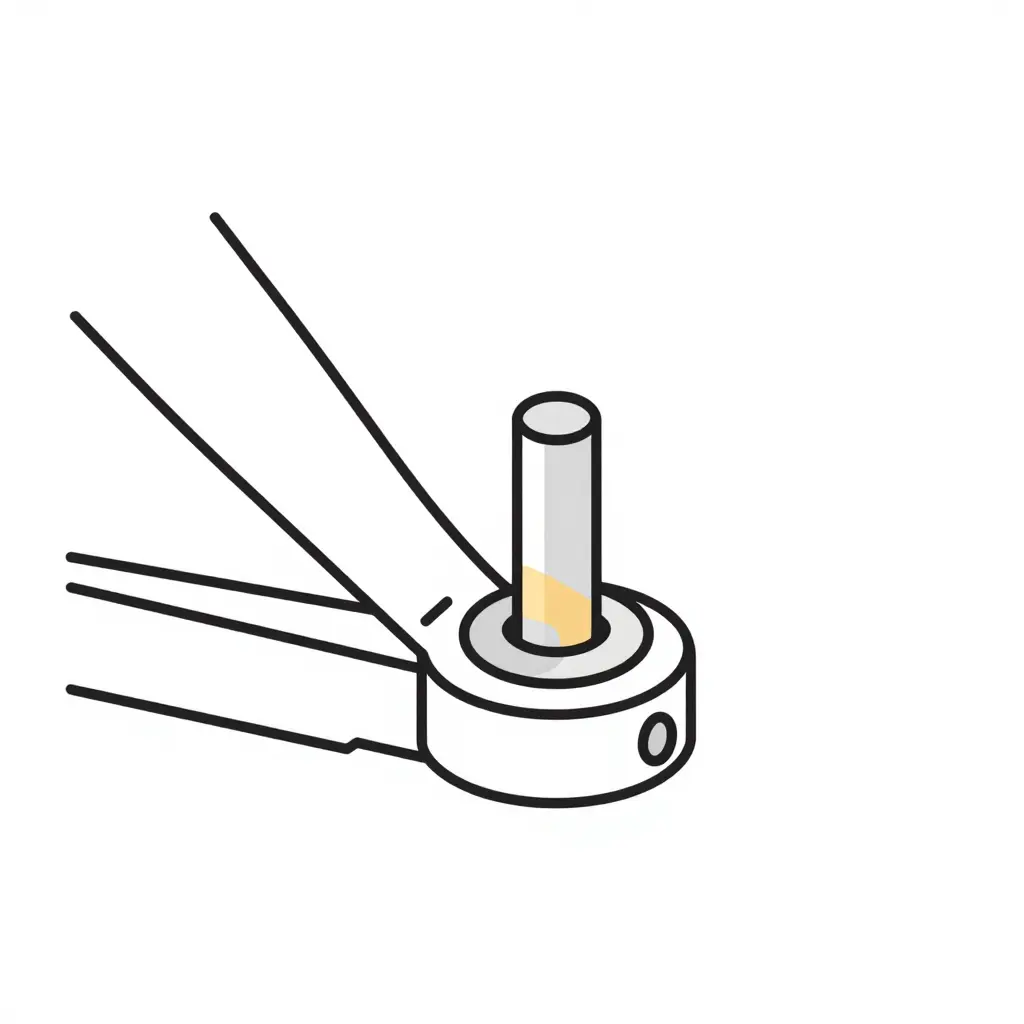
The diagram strips the wheel lift down to its core mechanical parts so you can picture where trouble hides before you crawl under a listing on eBay tow trucks for sale.
- The pivot pin – the cylindrical shaft that lets the L-arm swing and carry the load of a lifted vehicle.
- The bushing – the softer sleeve pressed into the lift arm that the pin rides inside.
- The lift arm and bracket – the structural housing that ties the assembly to the wheel lift frame.
Where Wear and Play Develop
The shaded zones mark the failure points worth inspecting:
| Wear Point | What Happens Over Time | What It Feels Like |
|---|---|---|
| Pin-to-bushing gap | Bushing bore ovalizes as the pin rocks under load | Slop or knock when the L-arm is rocked by hand |
| Pin surface | Scoring and galling from grit and lost grease | Rough rotation, grinding sensation |
| Arm-to-bracket clearance | Metal-on-metal widening of the joint | Side-to-side play in the whole lift arm |
Any visible gap, fresh grease weeping from an ovalized bore, or free play at the pivot is a red flag. If a pin that should be a snug fit drops through the bushing, the assembly is already worn and will only loosen further under real towing loads.
Subframe Damage: A Hidden Risk in Used Tow Truck Listings
The subframe is the structural backbone of a tow truck. It ties the cab, engine cradle, and rear lifting equipment to the main chassis rails and spreads the loads created by winching, lifting, and carrying vehicles. When it is damaged, that backbone is compromised.
Subframe problems rarely announce themselves. They develop in three ways:
- Cracks – Hairline fractures form at weld seams and near bolt holes where metal flexes under load.
- Bending – Overloading or a hard impact deforms the subframe, throwing the whole truck out of alignment.
- Corrosion – Road salt and standing water eat into the mounting points, weakening the steel from the inside out.
A hard life makes each one worse. A truck that has been overloaded, recovered vehicles beyond its rating, or survived an accident often carries stress the seller would rather you never see.
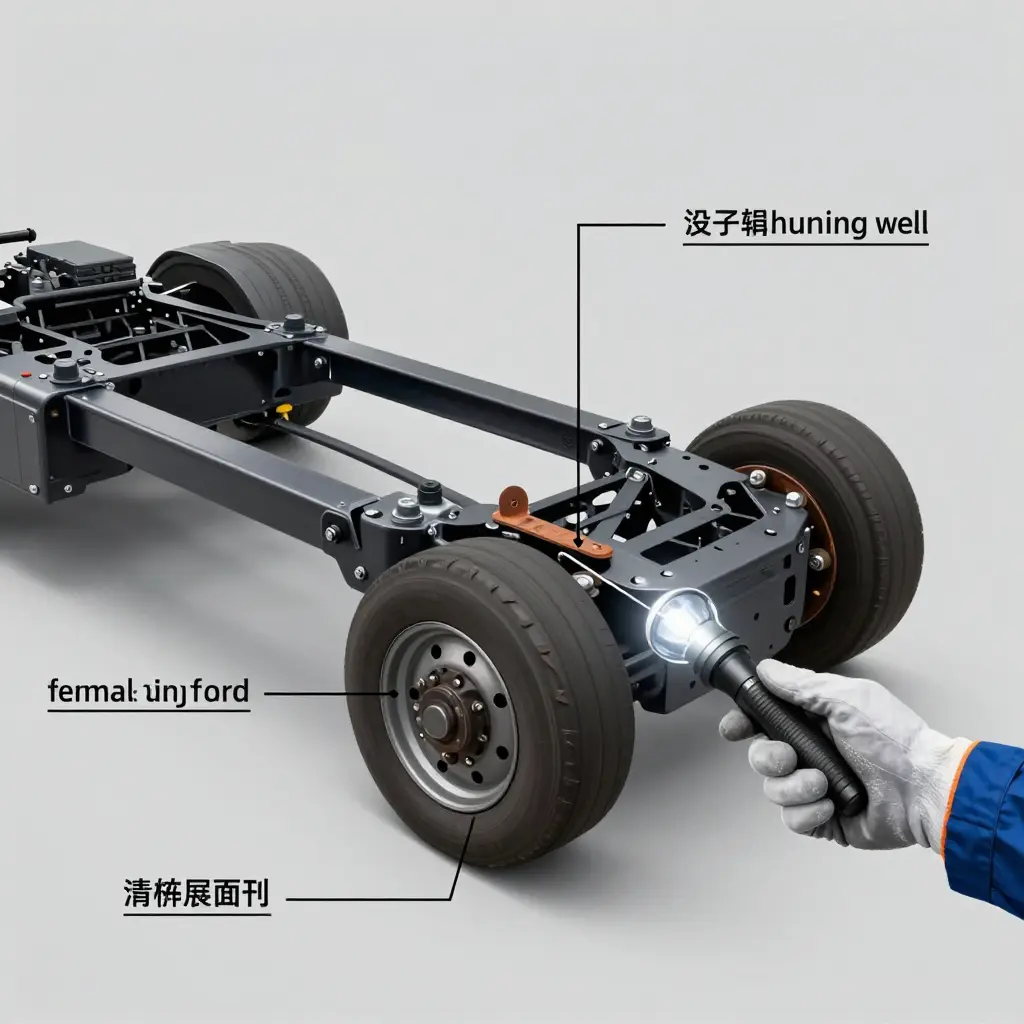
Concealing subframe damage is easier than you would think. Sellers weld over cracks, grind the repair smooth, then repaint the mounting area so it blends with the rest of the frame. Poor steering response, uneven tire wear, and a truck that will not track straight are real symptoms, and none of them show up in a photo. Judging used tow trucks listed on eBay from photos alone is a gamble.
Before you buy a wrecker, inspect the subframe in person. Check the welds at every mounting point: factory welds are even, while repairs look lumpy, porous, or ground down. Measure the frame diagonals and look for creased metal or wrinkled paint around the mounts. Probe for corrosion with a pick and tap the frame with a hammer; soft, flaky, or hollow-sounding steel means hidden damage.
| Inspection Point | What to Look For |
|---|---|
| Weld seams | Lumpy, porous, or ground-down repairs |
| Mounting bolts | Rust, elongation, or fresh paint |
| Frame alignment | Creased metal, uneven gaps |
| Corrosion | Flaking, pitting, hollow sound |
If anything feels off, walk away. A cheap used tow truck with subframe damage costs more to repair than a clean one costs to buy.
Reading Listing Photos and Descriptions Critically
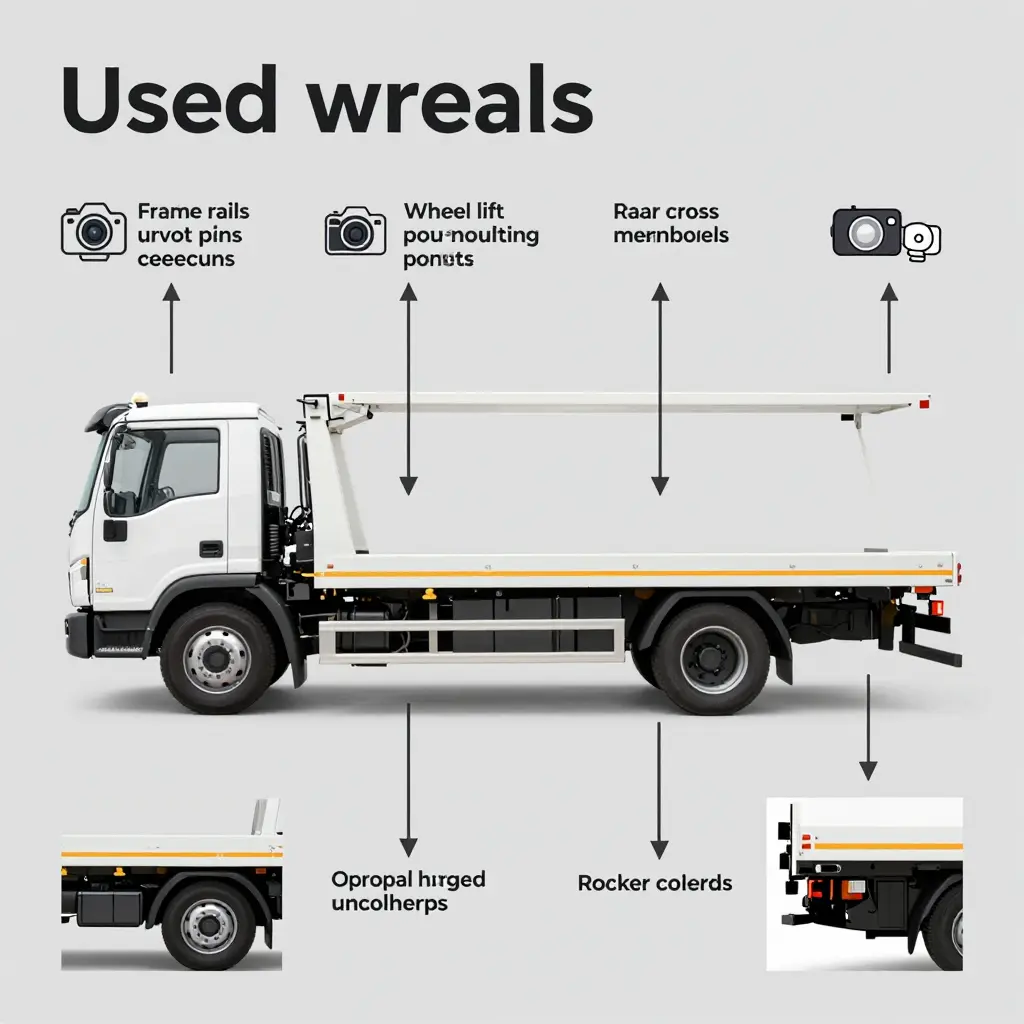
eBay listings reward careful reading. Sellers choose every frame they publish, and the images are picked to sell. Treat each photo as evidence to test, not proof of condition.
How Photography Hides Problems
Sellers rarely show a truck straight on. The usual shot is a front three-quarter angle that flatters the paint and hides the rear chassis. Many photos are taken on wet pavement, because water darkens metal and covers surface rust. Harsh midday sun bleaches the highlights and drives the frame into shadow, while dim or overcast shots blur the wheel lift pivot pins.
A cropped image is a quiet red flag. When a photo cuts off the boom base, the subframe rails, or the lower rocker panels, it is usually avoiding something. If every shot floats above the ground line, you never see the rust that starts at the bottom.
Vague Words and Recycled Photos
Descriptions matter as much as the pictures. Phrases like “runs great,” “clean truck,” or “needs minor TLC” say nothing about the parts that fail. Stock imagery or manufacturer brochure shots in a used listing suggest the seller may not be photographing the actual truck. If the description claims “rust-free” but every shot is taken from above or on a gravel lot, the claim and the evidence do not match.
What to Request Before You Commit
Before you commit to any tow truck for sale, ask for specific angles and close-ups:
- Straight-on shots of both frame rails from underneath, front to rear
- A close-up of the wheel lift pivot pins and bushings, with the lift raised and lowered
- The subframe where the wrecker body bolts to the chassis
- Rear crossmembers, spring hangers, and cab corners
- A cold-start video and a full walkaround with the engine running
A serious inspection compares every written claim against a matching photo. If a seller stalls on a simple photo request, treat the delay as a warning sign. For a fuller checklist on spotting problem listings, review our guide to eBay tow trucks for sale.
Frequently Asked Questions: Rust, Pivot Pins, and Subframe Damage
Buying a used tow truck on eBay can be a good way to add capacity, but the platform rewards careful buyers. These are the questions buyers ask most when evaluating eBay tow trucks for sale.
Which rust areas on an eBay tow truck are most critical to check?
Focus on structural, load-bearing areas, not cosmetic panels: the frame rails (especially above the rear axle and around the spring hangers), the subframe that carries the wheel lift and boom, the wheel lift pivot pins and their mounting brackets, and the underbody near the outrigger mounts. Surface rust on a body panel is usually cosmetic. Flaking, pitting, or bubbling rust on frame rails, gussets, and welds means metal loss that cuts into towing capacity and safety. Bring a magnet and a pick. If the frame sounds thin or the pick sinks in, walk away.
How can I detect worn wheel lift pivot pins without a shop inspection?
Most issues show up visually or by feel. Have the seller raise the wheel lift to travel height, then grab the lift arm and rock it side to side and up and down. Excessive play, a clunk, or visible gaps between the pin and its bore point to worn wheel lift pivot pins or egg-shaped bushings. Look for shiny wear rings, grease streaking, mismatched or freshly painted pins, and a pin boss that looks wallowed out. Slack that gets worse with the stinger loaded will only grow under towing loads.
Can subframe damage be repaired safely?
It depends on the type and location. Minor, localized surface corrosion can usually be cleaned and treated. Cracked, bent, or rusted-through subframe members and welds around the wheel lift mounts generally cannot be patched safely, because they carry the full weight of the lifted vehicle; a “repair” that plates over rust often fails again. Have a qualified welder or heavy-truck inspector assess any subframe damage before you buy. Often the right answer is to walk away.
What documentation and questions should I request from a seller before buying?
Ask for the VIN, title status and any liens, maintenance records, hydraulic service history, DOT inspection reports, and photos of the frame and subframe from several angles. Then ask: Has the truck been in an accident or had structural repair? When were the wheel lift pivot pins and bushings last serviced? Are there active rust or leak issues? Why are you selling? Is it covered by a warranty, or sold as-is? Straight answers and clear photos are what you want. Vague answers are a signal to slow down.
Is an “as-is” eBay tow truck a dealbreaker?
Not always, but it raises the stakes. Many listings are sold as-is, which means you carry all the risk for rust, worn wheel lift pivot pins, and subframe problems once you pay. That is why a pre-purchase inspection, in person or through a third-party service, matters. Factor likely repair costs into your offer, and treat any hidden structural issue as grounds to renegotiate or walk away.
The Final Call: A Decision-Making Framework
By the end of your review, one question remains: is this eBay tow truck worth your money? Judge it against three priorities, and only move ahead when all three clear the bar.
Rust comes first. Light surface oxidation on the bed is cosmetic. Flaking scale, perforated frame rails, or rust blooming around welds and mounting points means structural decay that will spread.
Wheel lift pivot pins come second. Rock the lift assembly and check for play, ovalized bores, or cracks. Worn or seized pins mean unreliable lifting and a costly rebuild.
Subframe integrity comes third. Look for cracks, previous weld repairs, and bent or patched sections. A compromised subframe undermines the whole platform.
| Finding | Risk | Decision |
|---|---|---|
| Surface rust only, tight pivot pins, straight subframe | Low | Proceed |
| Moderate rust, minor pin play, tidy weld repairs | Medium | Proceed only after a third-party tow truck inspection and a price adjustment |
| Perforated frame, seized pivot pins, cracked or rewelded subframe | High | Walk away |
Use the table as a brake pedal. When any finding lands in the high-risk column, stop; a discount rarely outweighs the safety and resale cost of a compromised wrecker.
That is why a hands-on or independent review of eBay tow trucks for sale matters. Photos hide what a flashlight and a pry bar show. A qualified inspector catches the rust, pin wear, and subframe damage that listings never mention.
Takeaway: Inspect before you commit. If rust, wheel lift pivot pins, and subframe integrity all pass, move ahead. If any one fails, walk away and keep looking.