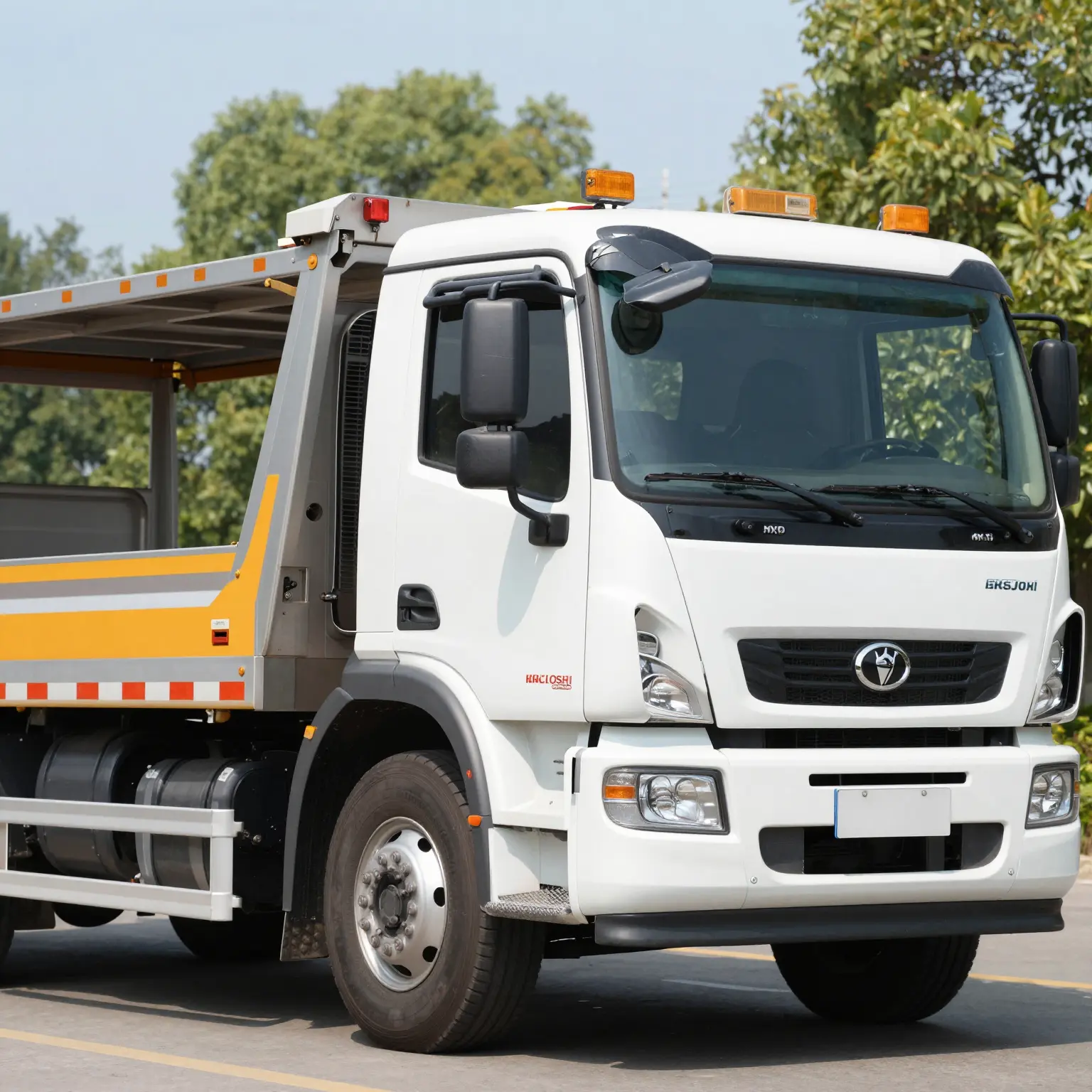

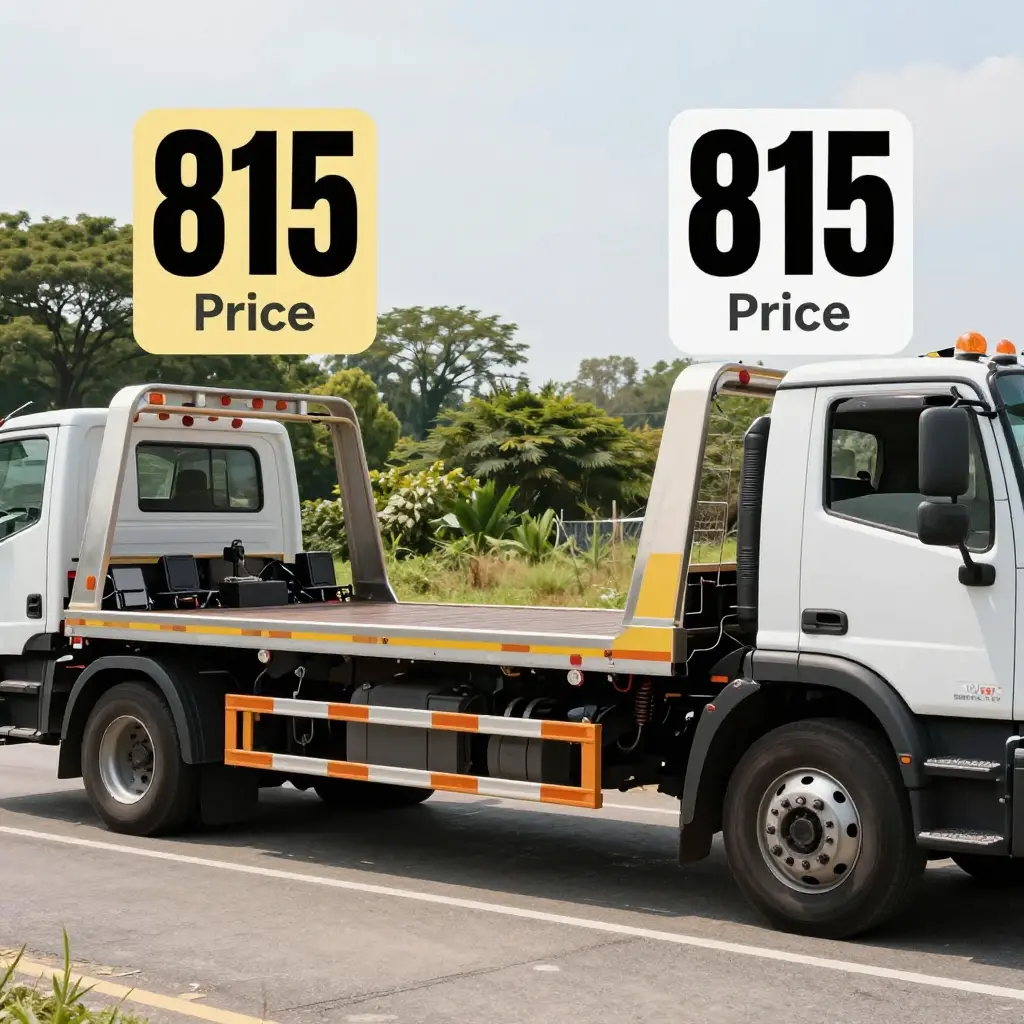
Two used flatbed tow trucks, same odometer reading, parked side by side on the same dealer lot. Most buyers would expect the price tags to match. They rarely do. One truck can sit eight thousand dollars below a truck that looks like its twin, and that gap is not a typo in the ad. It is the market saying that mileage is only one of several things that shape used tow truck pricing, and on commercial trucks it is often the weakest one.
Here is where the difference comes from. Prices on flatbed listings move with four things: physical condition, documented maintenance history, equipment specifications and configuration, and regional demand. Any one of them can swing a price by thousands of dollars on its own. Stack two or three in the same direction, and two trucks with matching odometers end up priced very differently. For a real-world starting point, browse current flatbed tow trucks for sale and watch how these variables sort the listings out. By the end, you will be able to tell whether a given price reflects genuine value or a weakness the seller is hoping you miss.
Factors That Drive a Used Flatbed Tow Truck Price Gap
Mileage gets the attention. It rarely explains the $8,000 spread between two otherwise identical flatbeds. The table below shows what actually moves a listed price, so you can weigh a truck against its asking number instead of the odometer.
| Pricing Factor | How It Affects Listing Price | Relative Impact (Low/Medium/High) |
|---|---|---|
| Documented maintenance history | Organized service records lower risk and justify a higher ask; missing logs invite negotiation | High |
| Subframe and rust condition | Corrosion on rails or crossmembers forces costly repair or cuts resale value sharply | High |
| Wheel-lift and pivot-pin condition | Worn pins and bent lift assemblies signal safety risk and replacement expense | Medium |
| Hydraulic pump and cylinder health | Seeping cylinders or a weak pump add thousands in deferred maintenance | High |
| Bed length and deck material | Longer steel or aluminum decks widen buyer demand and command a premium | Medium |
| GVWR and towing capacity configuration | A heavier-rated chassis and axles expand the work it can legally bid on | High |
| Tire, brake, and lighting condition | Immediate consumables and compliance fixes adjust perceived value | Low |
| Regional market demand | Local supply scarcity or oversupply changes how fast and how high it lists | Medium |
Treat the table as a scoreboard, not a checklist. A truck that scores well on the High-impact rows can carry a premium in good faith; one that fails them should list lower no matter how clean the odometer looks. Knowing where listings hide rust, wheel-lift, and subframe problems tells you which side of the gap you are actually paying for.
Physical Condition and Inspection Findings: The Real Price Driver
Two used tow trucks can show the same mileage on the dashboard and still sit eight thousand dollars apart on the lot. Mileage is a claim; condition is something you can verify. On any flatbed tow truck for sale, the inspection record, not the odometer, should decide which price you can defend.
Rust and corrosion: the hidden cost multiplier
Rust doesn’t announce itself. It starts under paint, seam sealer, and undercoating, where moisture and road salt collect in the subframe and crossmembers. The subframe ties the cab, bed, and rear suspension together, so corrosion there isn’t cosmetic. It’s a structural repair. Once weakened metal has to be cut, reinforced, or replaced, the bill runs into the thousands. That single variable accounts for a large share of the gap between two otherwise similar listings.
Wheel-lift pivot pins and their bushings wear with every lift cycle. Worn pins create play, uneven lifting, and extra stress on the wheel-lift frame. Replacing them is routine. Finding a cracked or elongated pivot bore is not.
A steel bed deck warps and fatigues under repeated heavy loads, showing up as ripples, sag, or a deck that no longer sits flat. Outriggers and stabilizers wear at their pads, pins, and hydraulic cylinders, and how worn they are tells you how hard the truck actually worked. None of it shows up on the odometer. Buyers who want to see how these defects move a price can review how hidden rust, wheel-lift pivot pins, and subframe corrosion widen the valuation gap.
Sellers price on appearance. Buyers should price on findings. A high-mileage truck that passed a thorough inspection often carries less financial risk than a low-mileage one hiding rust under fresh paint. Let the inspection lead the negotiation, not the odometer.
Documented Maintenance History
A service file is the closest thing a used flatbed tow truck has to a paper trail. Two trucks may show the same odometer reading, but the one with organized, verifiable records tells you what was maintained and what was deferred. When you go through those records, these are the signals that matter.
- Hydraulic fluid intervals: dated receipts and mileage for fluid and filter changes, proof the system wasn’t run on contaminated oil.
- Cylinder reseal or replacement: receipts for boom, wheel-lift, and tilt cylinder work, showing whether seals were refreshed before they started leaking.
- PTO service: records of power take-off inspection, clutch or driveline repair, and lubrication. Neglected PTOs tend to take the pump down with them.
- Brake and tire records: pad, rotor, and tire changes that hint at the stopping and load demands the truck faced.
- Wheel-lift pivot-pin greasing: recurring entries showing whether this high-wear point got routine attention.
- Subframe inspection notes: documented checks for cracks, rust, or repair welds on the mounting structure, the same areas that listings often quietly overlook.
- Engine and transmission service: oil analysis, fluid changes, and major repair invoices for the chassis drivetrain.
- DOT inspection and compliance records: annual reports and any out-of-service corrections, which confirm the truck stayed legal.
A complete service file does more than confirm the truck runs. It lets the buyer quantify how much component life is left instead of guessing, and that pushes used tow truck pricing in the seller’s favor. Put two comparable flatbeds with identical mileage side by side, and the one backed by dated hydraulic, cylinder, and DOT records can justify the higher asking price. That documentation gap is often what widens the spread between the two listings. Records are leverage: they cut perceived risk, shorten the haggling, and let a documented truck earn a premium over an identical unit with a thin history.
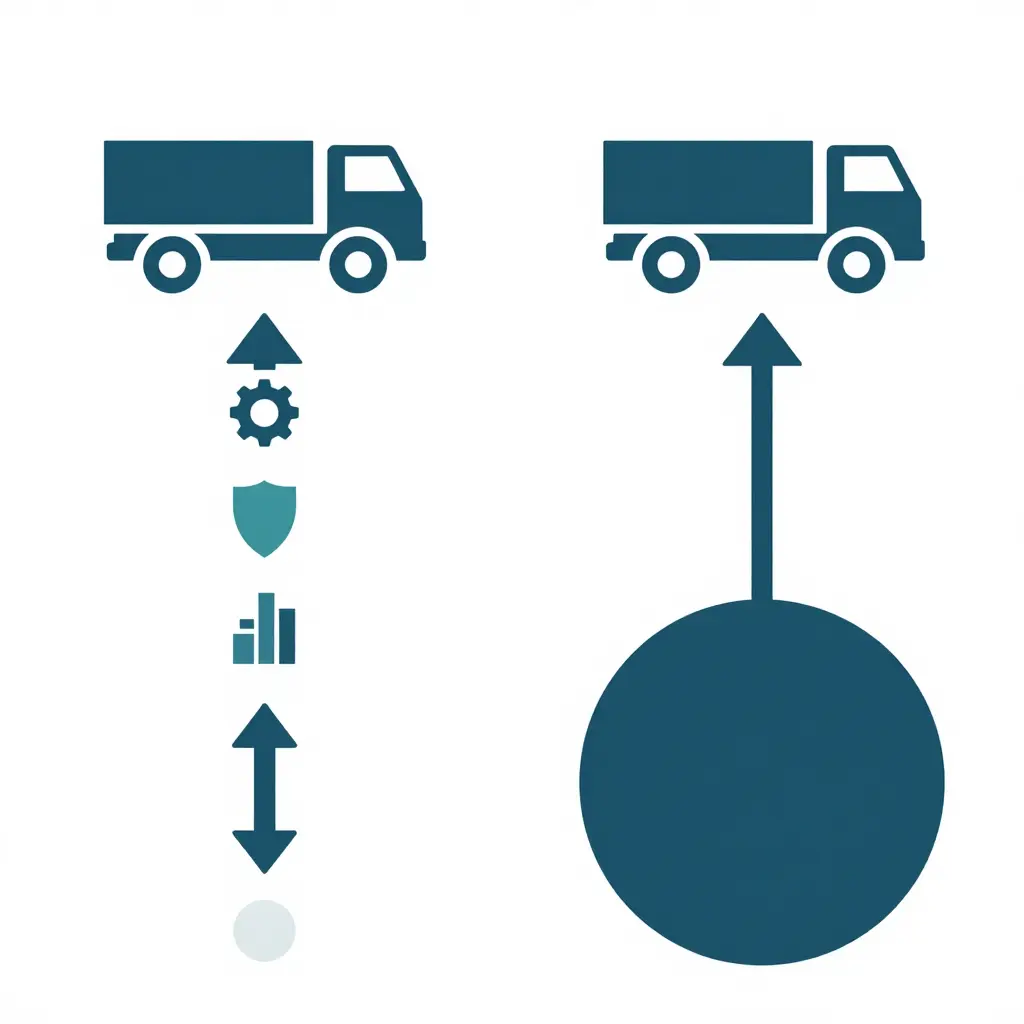
Two flatbeds leave the same lot with matching odometer numbers and land in different price brackets. Condition, maintenance history, specifications, and local demand are what pull the paths apart. The mileage is the same; everything else decides the destination.
Specifications and Configuration: Where the Real Price Gap Lives
Mileage tells you how far a truck has driven. It says nothing about how much work it can do. Two flatbeds with 180,000 miles on the odometer can sit $8,000 apart on the same lot, because one is a stripped workhorse and the other is a revenue machine. Specs and configuration decide which is which.
Deck and Body Specs Drive the First Big Split
Deck length is the clearest divider. An 18-foot deck handles sedans and small SUVs. A 21- or 22-foot aluminum deck takes full-size pickups, vans, and EVs without a fight. Aluminum costs more new and holds more resale value because it resists rust and cuts curb weight, which frees up towing capacity. Steel is cheaper up front, heavier, and slower to move on the used market.
Running Gear and Capacity Raise the Ceiling
Wheel-lift and underlift setups appeal to different buyers. A standard wheel-lift is simple and inexpensive. A self-loading underlift adds reach and control for heavier recoveries. GVWR and winch capacity push the ceiling higher. A truck rated at 19,500 lbs GVWR with a 12,000-lb winch can chase larger jobs than a 14,000-lb chassis with an 8,000-lb winch, and buyers pay for that headroom. Reviewing different wrecker configurations shows how each setup changes the work a truck can take on.
Chassis and Optional Equipment Close the Gap
Cab and chassis configuration matters for crew size and duty cycles. Add-ons like recovery booms, receiver hitches, and LED lighting packages move the price again. Each one widens daily capability and revenue potential, so a higher-spec truck lists higher even at identical mileage.
For a used commercial vehicle buyer, the takeaway is simple: look at the spec sheet, not the odometer. Browse light-duty tow truck listings and watch identical-mileage trucks separate on price as soon as equipment and ratings enter the picture.
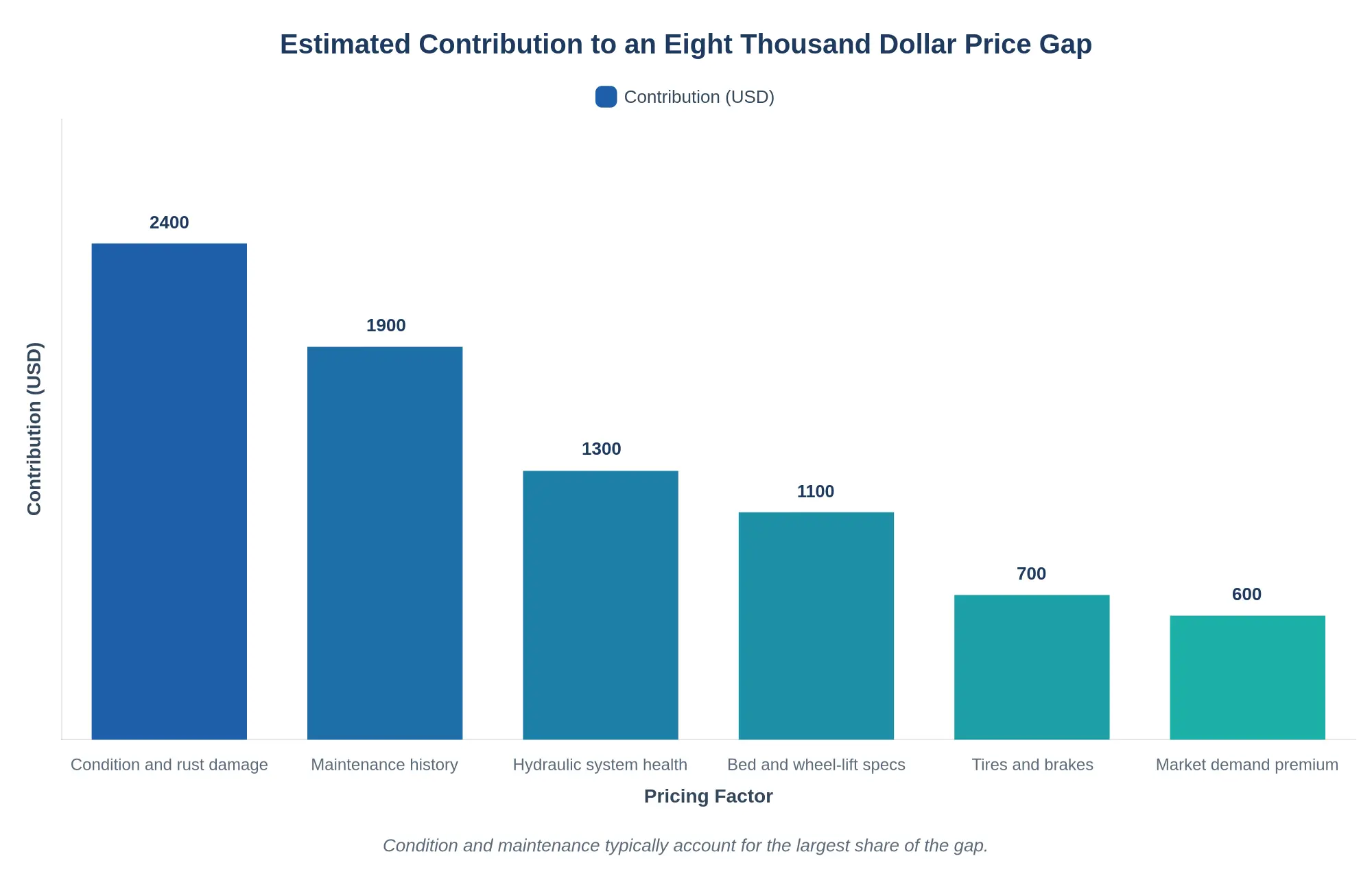
Figure: How each factor contributes to an eight thousand dollar price gap between two otherwise comparable used flatbed tow trucks. Condition and maintenance account for the largest share.
Market Demand and Regional Pricing Differences
Two identical flatbeds can share the same odometer reading, the same engine hours, and the same wheel-lift rating, and still list thousands of dollars apart. The answer usually isn’t in the metal. It’s in the map. Used tow truck pricing is regional, and the market in one metro area often behaves nothing like the market two states away.
Why the Same Truck Gets Two Different Price Tags
No single force sets a price. Several regional pressures stack up.
- Demand from local operators. Where motor clubs, police rotations, and construction work keep wreckers busy, buyers compete for the same handful of units, and that competition lifts asking prices even for average trucks.
- Fleet replacement cycles. When large regional fleets refresh on the same schedule, a wave of similar used flatbeds hits the market at once and sellers have to cut prices to move inventory.
- Seasonal recovery demand. Markets with harsh winters or storm seasons see demand spike during recovery periods, and buyers pay a premium for trucks that can work right away.
- New-truck availability. When lead times stretch, operators turn to the used market, tightening supply and raising prices.
- Regional labor and repair costs. High shop rates and scarce technicians make a worn truck riskier to own, which compresses what buyers will pay for high-mileage units.
Scarcity Inflates, Oversupply Compresses
Supply is the other half of the equation. When few suitable trucks are available within a comfortable driving radius, even rough examples get attention. When a region is flooded with inventory, buyers gain leverage and prices soften, no matter how well a truck has been maintained.
The practical point isn’t a prediction, it’s a rule: value a truck against its local market, not a national average. Whether you’re buying or selling, that’s the baseline for a sound decision. If you’re ready to compare inventory on your own terms, explore tow trucks for sale and review the basics of investing in tow trucks before you commit.
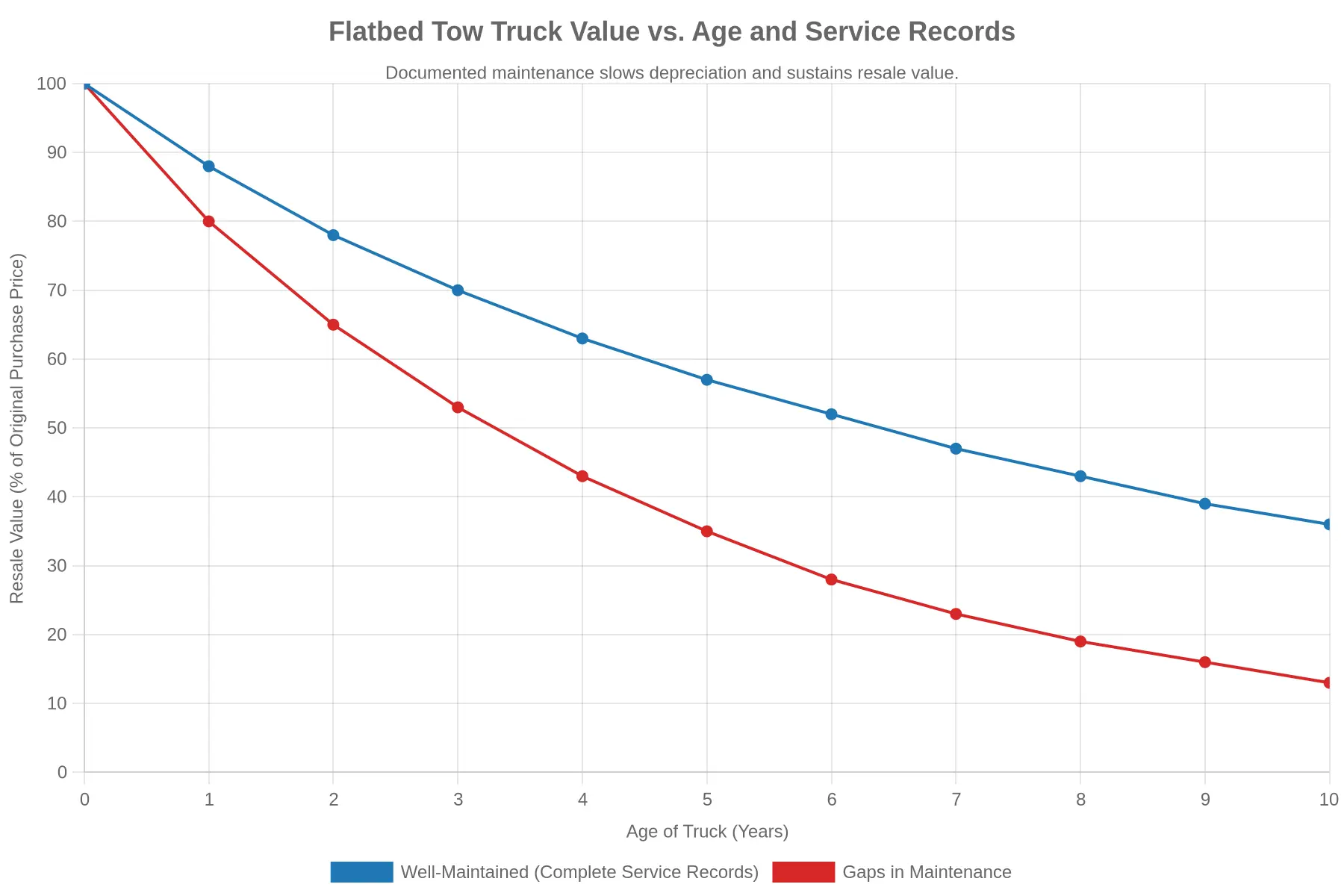
Flatbed Tow Truck Value vs. Age and Service Records. The chart plots resale value as a percentage of the original purchase price across ten years. Two lines diverge: a well-maintained unit with complete records, and one with gaps in maintenance. Documented maintenance slows depreciation and holds resale value, which is why a service log can justify thousands more in asking price.
Frequently Asked Questions About Used Tow Truck Pricing
Why can two used flatbed tow trucks with the same mileage list eight thousand dollars apart?
Two trucks can show identical odometer readings and still be in completely different mechanical shape. Hydraulic pump wear, subframe integrity, tire life, and previous duty cycles (heavy highway recovery versus light local towing) all feed into value. A fleet-maintained truck stored indoors will bring far more than one that sat outside with deferred repairs. Used tow truck pricing follows overall condition, not just mileage.
Does higher mileage always mean lower value?
Not necessarily. A well-maintained high-mileage truck with complete service records can be worth more than a low-mileage truck with neglected maintenance. Modern diesel engines often run past 300,000 miles when serviced properly. On any used commercial vehicle, documented care usually outweighs a raw mileage number.
How much does rust damage reduce a tow truck’s resale value?
Rust is one of the most expensive problems to repair because it weakens the frame, subframe, and bed structure. Surface rust may cost little. Structural corrosion can cut resale value by 20 to 40 percent or more. In severe cases the truck becomes unsafe and hard to finance. Anyone buying used flatbed tow trucks should inspect the undercarriage and pivot points carefully.
Why does documented maintenance history matter for used tow truck pricing?
Service records prove that oil changes, hydraulic servicing, and brake work happened on schedule, which lowers the buyer’s risk and supports a higher asking price. A truck with a full history is easier to insure and easier to resell. Without records, buyers assume deferred maintenance, and that assumption pulls used tow truck pricing down.
Do specifications like bed length and wheel-lift type change the price?
Yes. Bed length determines what the truck can carry, so longer beds often add value. Wheel-lift versus integrated lift, winch capacity, and chassis class shift pricing too. A truck that matches a specific niche can sell above the average market rate.
How does regional demand affect the tow truck market?
Prices vary by region with local demand, fuel costs, and competition. Dense metro areas with heavy traffic often support higher prices; rural markets may list lower. The same used commercial vehicle can sell for thousands more in one state than another, so compare a few regional markets before you buy.
The Bottom Line: Why Identical Mileage Does Not Mean Identical Price
When two used flatbed tow trucks show the same odometer reading and list $8,000 apart, mileage is rarely the reason. Condition creates the widest gaps: a truck with a dry hydraulic system, tight wheel-lift pivot pins, and a rust-free subframe is worth far more than one hiding pivot wear or a seeping pump. Maintenance history comes next. A complete service file covering fluid intervals, brake work, and inspections tells you someone took care of the truck; a thin file forces buyers to price in uncertainty. Specifications decide whether the truck fits your workload at all, since deck length, GVWR, and lift capacity matter regardless of how clean it looks. And demand sets the regional baseline, so the same unit can command thousands more in a busy metro than in a rural market.
Together those four explain the whole spread. Mileage is a starting point, not a verdict.
Buyer’s Action Checklist
Before you commit, work through this:
- Order an independent pre-purchase inspection covering the hydraulic system, wheel-lift assembly, and subframe integrity.
- Review the full service file: hydraulic fluid intervals, brake repairs, and inspection records.
- Check the hydraulic and wheel-lift condition yourself: leaks, pivot-pin play, and cylinder performance.
- Match deck dimensions, GVWR, and lift capacity to the work you actually do.
- Compare regional pricing so you don’t overpay a local demand premium.
Judging a truck well also means knowing how good equipment is built. Reviewing how professional lifting vehicles are manufactured helps you judge build quality and spot shortcuts before they turn into repair bills.
Used tow truck pricing reflects condition, history, specifications, and demand, not mileage alone. Buyers who check all four protect their capital and avoid the surprises that eat into margins long after the keys change hands.