
Why Does a Wrecker’s Front Axle Lift Before the Boom Hits Its Rated Load?
A wrecker backs onto a recovery scene, the boom swings out, and the front tires come off the pavement — sometimes with barely any load on the hook. For a shop that depends on wreckers to move disabled vehicles, that’s worth understanding before anyone trusts a spec sheet. A truck rated to lift thousands of pounds shouldn’t have trouble keeping its own nose down. The reason comes down to geometry, weight distribution, and leverage. Below is what lifts the front axle, what that reveals about real load limits, and how it affects the way you choose and run a rig. If you’re still picking equipment, start with choosing the right wrecker for your shop.
Outline: Why a Wrecker Tow Truck’s Front Axle Lifts Before the Boom Reaches Rated Load
1. The Real Force Is a Load Moment, Not Just Weight
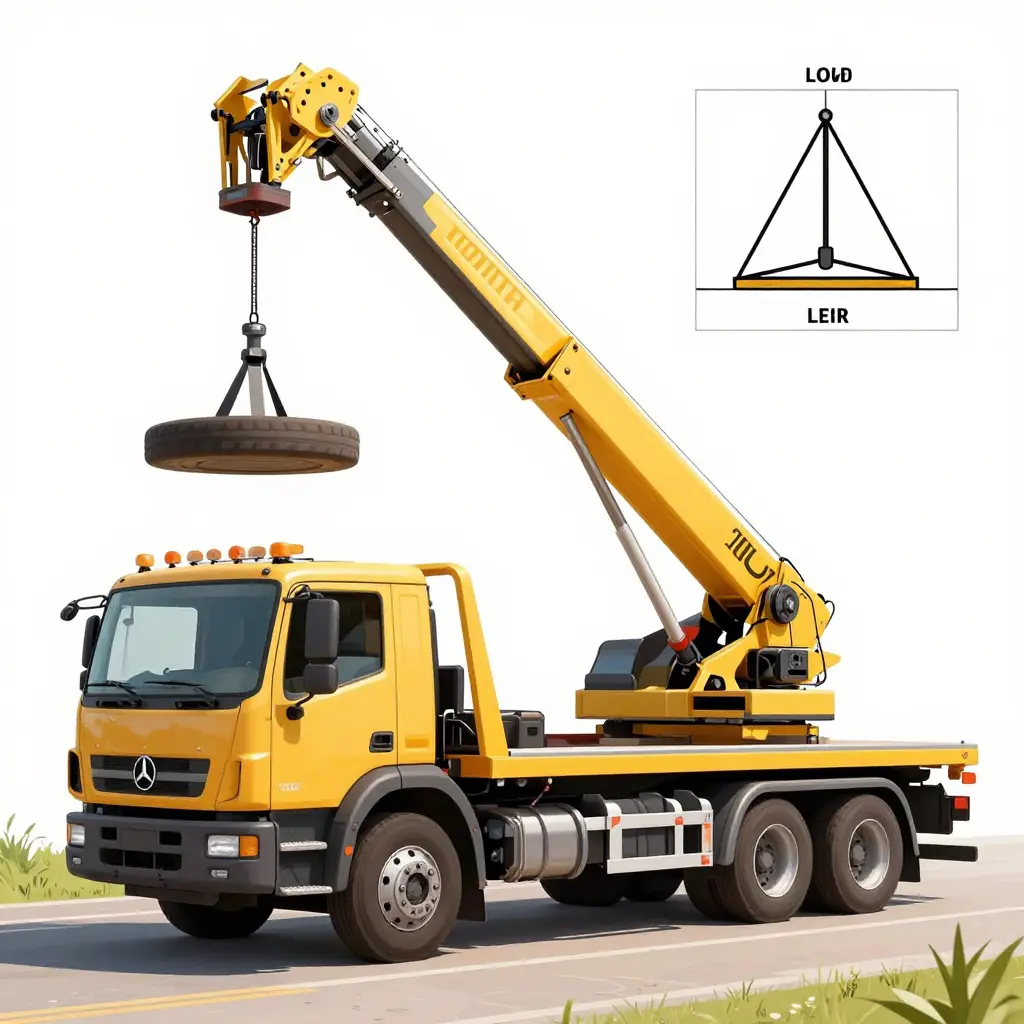
- A boom’s “rated load” is measured at the boom tip, but what the truck feels is a rotating force: the load moment.
- Load moment = lifted weight x horizontal distance (the moment arm) from the boom pivot.
- Swing or extend the boom outward and the moment arm gets longer, so stress on the chassis grows even when the weight on the hook doesn’t change.
- That’s why a load that looks under rating by weight alone can still destabilize the truck.
2. The Rear Axle Acts as a Fulcrum
- Once a load is applied, the rear axle (or rear suspension group) becomes the pivot point.
- Chassis mass and any counterweight behind that pivot create a restoring moment that holds the front tires down.
- The front axle carries only its share of the truck’s unloaded weight, so it doesn’t take much imbalance to unload it.
3. Stability Usually Fails Before Structural Strength
- Two separate limits exist side by side: the structural boom rating and the tipping (stability) rating.
- The stability limit is normally the lower of the two, so the truck lifts a front wheel long before the boom steel is ever at risk.
- Ratings are set conservatively, and a front axle lift is the visible symptom of reaching that tipping threshold.
4. Setup and Ground Conditions Shift the Threshold
- Soft ground, slopes, and poorly placed outriggers reduce the restoring moment — see why outriggers sink into soft ground before your next lift.
- Poorly balanced loads and off-center hook positions add to the tipping force.
- Change one thing about the setup and the tipping point can move a long way, even at the same weight.
5. What This Means for Auto Repair Shops
- Do not judge safety by the boom gauge or the weight on the hook alone.
- Treat a lifting front axle as an early warning to reset the load or reposition the truck.
- Keep load charts handy, train operators on moment math, and confirm ground support before every lift.
The Load Trend Behind Early Front Axle Lift
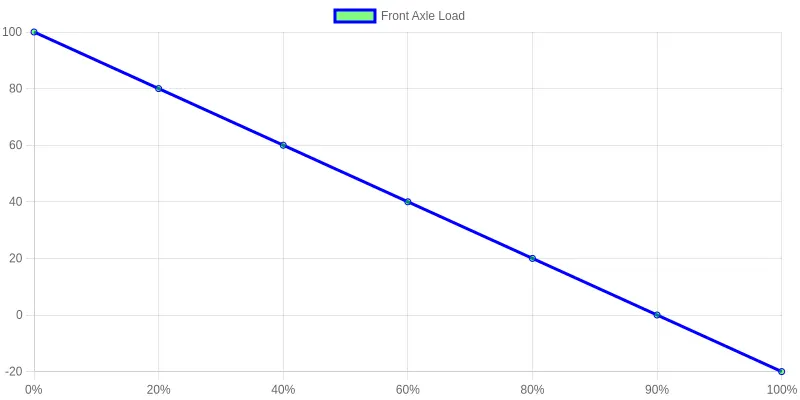
The chart below shows the relationship every wrecker operator should know: as boom load climbs toward its rated capacity, the load carried by the front axle falls. The front axle reaches zero — and the wheels leave the ground — well before the boom hits 100% of its rating.
How to Read the Trend
- The relationship is linear. Each additional percentage point of boom load transfers a nearly equal amount of weight off the front axle and onto the rear.
- Lift-off happens early. On a typical rear-pivot wrecker, the front axle loses its footing around 85-90% of rated boom load — not at the rating itself.
- The physics is leverage. The rear axle is the fulcrum, so any load behind it rotates weight off the front. The slope is gentle, but it still crosses zero earlier than most people expect.
What This Means in the Shop
A boom’s rated capacity isn’t the same as its safe working load with the front wheels planted. The rating describes what the boom structure can hold; it says nothing about how long the front axle stays down. Watch only the boom load gauge and the front end can rise while the numbers still read “safe.”
If you’re spec’ing equipment for a busy shop, it pays to understand how lifting geometry, axle placement, and counterweight interact. Seeing how professional lifting and special-vehicle builders set those balance points helps you choose a unit whose front axle stays grounded through the loads you actually handle. For the broader picture of matching a unit to your workload, see our guide on choosing the right wrecker and tow truck types.
Conclusion: Balance Beats Brute Force
A wrecker’s front axle lifts before the boom reaches its rated load because the two numbers measure different things. Rated capacity describes what the hydraulic system can lift in isolation. Whether the front axle stays down depends on leverage, wheelbase geometry, and how far the center of gravity drifts once a load is suspended. As the boom extends and the load swings out, the effective moment arm grows, shifting weight off the steer axle long before the hydraulics hit their limit. That’s why experienced operators watch the chassis, not just the gauge.
For a shop that fields recovery calls, that distinction decides how the truck gets set up. A wrecker that lifts its nose prematurely is telling you the load’s geometry, not its tonnage, is the real constraint. Rotating the boom rearward, shortening the reach, or repositioning the vehicle restores the balance far more safely than pushing the pump harder. Ignore those signals and you risk unloaded steering, loss of control, and an avoidable accident on the shoulder.
Read the axle and the boom stays within safe limits. If you’re evaluating wreckers for your fleet, look beyond rated capacity and study how each chassis handles leverage in the real world. This guide to wreckers and tow trucks covers how to match the right equipment to your operation.