
In today’s competitive business landscape, every decision counts, and the choice of vehicle can make or break operational efficiency. For business owners, mid-size trucks have emerged as a critical asset, striking an ideal balance between towing capacity and maneuverability. The term ‘towing capacity mid size trucks’ resonates deeply with those in industries reliant on transport and logistics, as these vehicles often provide the power needed to handle a variety of loads, while remaining easy to navigate in urban environments. Furthermore, with an emphasis on reliability and performance, companies like Zoomlion stand out by providing durable equipment tailored to meet the diverse demands of today’s businesses. Investing in the right mid-size truck can enhance productivity significantly and lay the groundwork for future success. Not only do these trucks offer the capability to tow substantial weights, but they also imbue confidence in their operators, reflecting the professionalism and commitment to quality that businesses strive to uphold. This makes them not just tools, but integral components of a successful operational strategy.
Common Business Applications for Mid-Size Trucks
Mid-size trucks have become integral to various industries, primarily due to their excellent towing capacity and versatility. Here’s a list of common applications where these vehicles shine:
-
Construction:
-
Ideal for transporting tools, equipment, and materials around job sites.
-
Their towing capacity allows them to haul construction trailers or heavy machinery easily.
-
Agriculture:
-
Used to transport produce, livestock, and farm equipment.
-
The ability to navigate rural areas efficiently makes them a reliable choice for farmers.
-
Logistics:
-
Serve as versatile vehicles for deliveries in urban settings, where larger trucks may struggle.
-
Their towing capacity is vital for moving trailers and cargo loads, facilitating efficient supply chain management.
-
Towing Capabilities:
-
Vital for businesses that require the transportation of heavy equipment or recreational vehicles.
-
Mid-size trucks hold advantages in heavy load management while maintaining better fuel efficiency compared to larger trucks.
Each of these applications underscores the importance of towing capacity in mid-size trucks and highlights their role in optimizing operations across various sectors. For more insights on managing towing requirements in your business, learn more about investing in tow trucks. Furthermore, check out our article on mid-size trucks and their towing capabilities for additional information.
By selecting the right mid-size truck, businesses can enhance their operational efficiency and productivity.
| Truck Name | Manufacturer | Maximum Towing Capacity (lbs) | Key Features |
|---|---|---|---|
| Toyota Tacoma | Toyota | 6,800 | V6 engine; robust off-road capabilities; advanced safety tech |
| Ford Ranger | Ford | 7,500 | Turbocharged engine; excellent payload; updated infotainment |
| Chevrolet Colorado | Chevrolet | 7,700 | Versatile bed options; technology features; strong V6 engine |
| Nissan Frontier | Nissan | 6,720 | Powerful V6 engine; spacious interior; good off-road ability |
| GMC Canyon | GMC | 7,700 | Sleek design; high towing capacity; premium interior options |
Summary of Key Features:
- Engine Options: Most mid-size trucks come with options ranging from turbocharged four-cylinder engines to more traditional V6 engines.
- Technology: Many models feature advanced infotainment systems that integrate with smartphones, enhanced safety features, and driver-assist technologies.
- Fuel Economy: Typically ranges from about 18-23 mpg in the city and 24-29 mpg on the highway, depending on the engine and configuration.
Towing Capacity Standards for Mid-Size Trucks: Impact on Business Owners
In 2023, understanding towing capacity is crucial for business owners who rely on mid-size trucks for operations. Whether towing trailers, equipment, or materials, it’s essential to know the towing capacity standards dictated by regulations and the influence these standards have on decision-making processes.
Overview of Towing Capacity
Mid-size trucks, including popular models like the Ford Ranger, Chevrolet Colorado, and Toyota Tacoma, typically have towing capacities ranging from approximately 3,500 to 7,700 pounds. The specific capacity can vary with the truck’s configuration, engine type, and drivetrain. It’s vital for business owners to be aware of these specifications, as exceeding the rated towing capacity can result in severe safety risks and legal consequences.
Regulatory Framework
Towing capacities are informed by standards set by various organizations, including the Department of Transportation (DOT) and the Society of Automotive Engineers (SAE). These organizations establish regulations that dictate how towing capacities should be determined. Key factors include:
- Weight Regulations: Safety regulations mandate that the total weight (truck plus trailer) must not exceed the Gross Vehicle Weight Rating (GVWR).
- Equipment Requirements: States can have specific regulations for the safety chains, brake systems, and other equipment necessary for safe towing.
Impact on Business Owners
Understanding these standards directly impacts how business owners make decisions about fleet management and operational efficiency. Consider the following points:
- Cost Management: Knowing the precise towing capacity allows business owners to avoid over-purchasing trucks that exceed operational desires while still achieving necessary performance without risking compliance.
- Safety Compliance: Adhering to towing standards helps mitigate liability risks associated with road accidents due to improper towing.
- Operational Efficiency: Businesses can plan more efficiently for hauling needs, ensuring trucks are equipped appropriately with necessary towing packages that can include enhanced cooling systems and stiffer suspensions for optimal performance.
For those looking for more detailed insights into the benefits of investing in capable trucks, consider reading about investing in tow trucks or reviewing the specifications of mid-size trucks with the highest towing capacity.
In conclusion, understanding towing capacity standards for mid-size trucks is essential for informed decision-making, helping business owners stay compliant and operationally efficient while meeting their transportation needs.
When it comes to mid-size trucks, understanding the factors that influence towing capacity is crucial for business owners who require reliable performance. Here are the key elements that affect how much weight these trucks can tow:
-
Engine Size and Power
The engine size is a significant determinant of towing capacity. Generally, larger engines with more horsepower and torque can tow heavier loads. For example, trucks equipped with V6 or V8 engines provide better towing capacity compared to those with four-cylinder engines. As an illustration, the Ford Ranger can tow up to 7,500 lbs when equipped with the right engine and towing package. -
Vehicle Weight
The gross vehicle weight rating (GVWR) and curb weight of the truck play essential roles in its towing capacity. A heavier truck can often support greater towing loads due to a larger structural framework, which can handle the stresses of towing. Business owners must consider the balance between the truck’s weight and the weight of the load it needs to tow. -
Towing Equipment
The type of towing equipment installed can also impact towing capacity. Vehicles may come with specific towing packages that include heavier-duty suspensions, better brake systems, and specialized hitch systems, all of which enhance the capability of the truck to pull larger trailers or loads. It is advisable for business owners to invest in reliable towing equipment to ensure safety and efficiency. -
Rear Axle Ratio
The rear axle ratio determines how effectively a vehicle can transfer engine power to turn the wheels and tow. A lower numerical ratio generally allows for better towing capability-as it provides more torque at lower speeds, which is beneficial when starting from a stop with a heavy load. -
Transmission Type
The type of transmission can affect towing performance as well. Trucks with automatic transmissions typically perform better under load, offering features like tow-haul modes that optimize gear shifting for towing situations.
Conclusion
Understanding these factors is crucial for any business investing in a mid-size truck for towing needs. By selecting a truck that balances engine power, weight, and adequate towing equipment, business owners can ensure that their operations run smoothly and efficiently. For further information on making smart investments in tow trucks, consider investing in tow trucks.
In summary, knowing these factors will help business owners choose the right mid-size truck to meet their towing expectations. Check out resources like the 2023 Mid-Size Truck Specs for more detailed specifications.
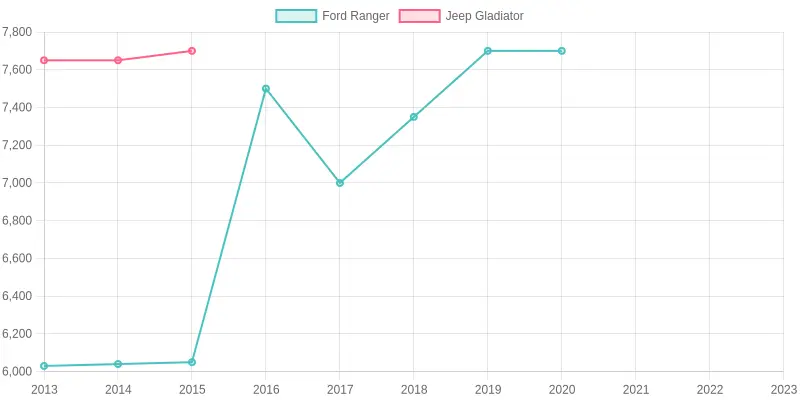
Towing Capacity of Mid-Size Trucks Over the Years
Understanding the towing capacities of mid-size trucks is crucial for business owners who rely on these vehicles for their operations. The following chart illustrates how towing capacities have evolved over the last decade, highlighting trends and advancements in truck capabilities.
Notable Capacity Milestones:
- 2013 – 6,030 lbs (Ford Ranger)
- 2016 – 7,500 lbs (Ford Ranger)
- 2017 – 7,650 lbs (Jeep Gladiator)
- 2021 – 7,700 lbs (Ford Ranger)
This information showcases the growing capabilities of mid-size trucks, empowering business owners to choose models that align with their towing needs.
For detailed specifications on towing capacities, you can learn more about investing in tow trucks. Additionally, check out our insights on mid-size trucks with the highest towing capacity to make an informed decision.
“In the realm of commercial vehicles, choosing a mid-size truck with optimal towing capacity is not just a matter of preference but a crucial determinant of efficiency. A vehicle that can tow heavier loads can significantly enhance operational productivity, as it allows businesses to complete more tasks in fewer trips.”
- Joe Smith, CEO of Fleet Management Solutions
“For many trades, from construction to landscaping, a mid-size truck serves as the backbone of operations. Their towing capabilities directly impact the ability to manage workloads effectively and meet client demands on time.”
- Lisa Johnson, Industry Analyst at Automotive Insights
“If your business relies on transporting equipment or goods, investing in a mid-size truck with high towing capacity is essential. It not only saves time but also reduces fuel costs, ensuring that the vehicle pays for itself over time.”
- Mark Thompson, Transport Industry Expert
These insights underline the critical role that towing capacity plays in the operational success of businesses that depend on mid-size trucks. For further information on investing in vehicular assets for business, consider learning more about tow trucks.
In conclusion, understanding the towing capacity of mid-size trucks is crucial for business owners looking to optimize their fleet for efficiency and effectiveness. Mid-size trucks, such as the Toyota Tacoma, Chevrolet Colorado, and Ford Ranger, have varying towing capabilities, typically between 3,500 to 7,700 pounds. This range allows businesses to make a strategic choice based on their specific hauling needs, whether it’s transporting equipment, vehicles, or other materials crucial for operations.
Additionally, the versatility, lower cost of ownership, and enhanced fuel efficiency make mid-size trucks an attractive option for businesses. Their maneuverability is a significant advantage in urban settings where larger trucks may struggle to navigate. As highlighted, selecting the right truck is integral not just for effective towing but also ensures safety and reliability during operations.
Don’t wait – contact us today to discuss your needs, request a quote, or learn more about how we can support your mission to protect lives and property!
FAQs about Mid-Size Trucks for Business Owners
What is the towing capacity of mid-size trucks?
Mid-size trucks typically offer towing capacities ranging from 7,000 to 8,500 pounds depending on the model. Popular models like the Toyota Tacoma, Ford Ranger, and Chevrolet Colorado provide robust towing capabilities, making them an excellent choice for business needs such as transporting equipment or vehicles.
What are the benefits of using mid-size trucks?
- Versatility: Mid-size trucks offer a combination of passenger comfort and utility, allowing for transportation of both goods and people.
- Fuel Efficiency: They generally offer better fuel efficiency compared to larger trucks, reducing operational costs for businesses.
- Maneuverability: Their smaller size compared to full-size trucks allows for easier navigation in urban areas, making them suitable for various types of jobs.
- Towing Capabilities: Many mid-size trucks are capable of towing sizeable loads, which is crucial for businesses that require it. Models like the Chevrolet Colorado and Ford Ranger are noted for their towing prowess.
How do I choose the right mid-size truck for my operation?
When selecting the right model, consider the following factors:
- Towing Needs: Assess the weight of the loads you need to transport. Check the specific towing capacity of the mid-size truck you’re considering, as this can significantly impact your decision.
- Configuration Options: Look for models that offer customizable features such as engine choice, cab size, and bed length to meet your specific operational requirements.
- Budget: Compare prices across different models and consider the long-term costs associated with fuel efficiency and maintenance.
- Test Drive: Always take a truck for a test drive to experience its handling, comfort, and how it meets your needs.
For more details about selecting the appropriate vehicle for your operations, visit this article on how to choose the right wrecker and consider the benefits of investing in tow trucks for your business here.