
Why Phoenix Tow Truck Companies Replace Winch Cables Twice as Often as Coastal Fleets
Tow truck companies in Phoenix replace their winch cables about twice as often as coastal fleets running comparable call volumes. The pattern holds across heavy-duty wreckers, flatbeds, and light-duty units alike, which points to the environment rather than a bad batch of cable.
Phoenix is hard on steel wire rope. Coastal crews deal with salt spray and humidity; desert crews deal with airborne silica, strong ultraviolet light, and surface temperatures that routinely top 140°F. No single one of those kills a cable. Combined, they cut its working life roughly in half and push tow truck maintenance costs up with it.
The sections below compare desert and coastal conditions directly, mechanism by mechanism, then turn that into inspection intervals and replacement thresholds. The point is to help arid-climate fleet managers replace a cable on a schedule instead of after it snaps.
How Winch Cable Construction Shapes Replacement Cycles
How long a winch cable lasts is largely decided before it goes on the drum. The wire rope can be built from different wire counts, lay patterns, core materials, and coatings, and each choice sets a ceiling on service life for heavy-duty towing.
The Three Core Components
- Wires – the individual steel filaments that carry the tensile load.
- Strands – groups of wires helically twisted together around the rope’s axis.
- Core – the central member, either fiber or steel, that supports the strands and stores lubricant.
A 6×19 or 6×37 rope, common on recovery winches, twists six strands around one core. More wires per strand buys flexibility, but those wires are thinner and abrade faster.
Lay Direction, Lubrication, and Galvanization
Lay direction – regular or lang, right or left – sets how the rope resists rotation and how it seats on a drum. Lang lay puts more wire surface against the sheave and wears longer, at the cost of a stronger twist. Lubrication travels through the core to the inner wires, cutting friction and keeping moisture out. Galvanizing adds a zinc coating that corrodes in place of the steel; in dry air it can last years, but where chlorides are present it is consumed quickly.
Why Construction Drives Winch Cable Wear
Winch cable wear never spreads evenly along a cable. It collects where wires rub against each other, where the rope bends over a sheave, and where strands press into the core. Fewer, thicker wires stand up to abrasion but fatigue sooner; many thin wires bend easily and shed metal. What sets the replacement clock is the build of the rope, not the load rating alone.
Arid Dust vs. Coastal Salt
The same rope spec behaves differently depending on where it works. Around Phoenix, fine grit works its way between wires and strands and grinds them as the rope flexes, while heat and UV bake the lubricant out of the core. Coastal air attacks differently: humidity and salt push galvanized and stainless ropes toward pitting and embrittlement. An identical cable therefore gets a shorter, abrasion-dominated life in the desert and a longer, corrosion-limited one at the coast.
If you compare replacement rates across regions, match them to tow truck company Phoenix operating conditions and your own exposure rather than a national average.
Mechanisms of Winch Cable Wear in Arid Climates
In the desert a winch cable does not fail one way; several mechanisms work on it at once and compound each other. Each one shortens the service interval on its own, which is why tow truck maintenance schedules in desert regions call for more frequent inspection and earlier replacement than coastal programs.
-
Abrasive dust and grit. Wind-blown silica is fine enough to slip between the outer strands. Once it is trapped, it acts like lapping compound, grinding wire against wire on every load cycle. The damage happens below the surface, so it is usually invisible until strands begin to snap.
-
Day-night thermal cycling. Phoenix swings about 20 to 25 degrees between the afternoon high and the pre-dawn low – less than an open desert would, because the urban heat island holds warmth overnight. That cycle still moves steel and synthetic components at different rates, working the cable against its fittings and loosening the lubricant seal between strands, which feeds fatigue cracking.
-
Ultraviolet exposure. Phoenix gets more sunshine than any other major city on Earth, roughly 300 days a year. That UV breaks down the oils and greases protecting the cable and leaves bare steel. On synthetic-rope and fiber-core assemblies it embrittles the outer filaments, cutting both strength and elongation.
-
Dry air. With almost no ambient moisture, no thin protective film reforms on the wire surfaces. What lubricant remains evaporates or oxidizes faster, so friction and fretting between strands climb.
Abrasion and thermal fatigue weaken the rope structurally, while UV and dry air strip away whatever would normally slow that decline. Degradation accelerates instead of leveling off.
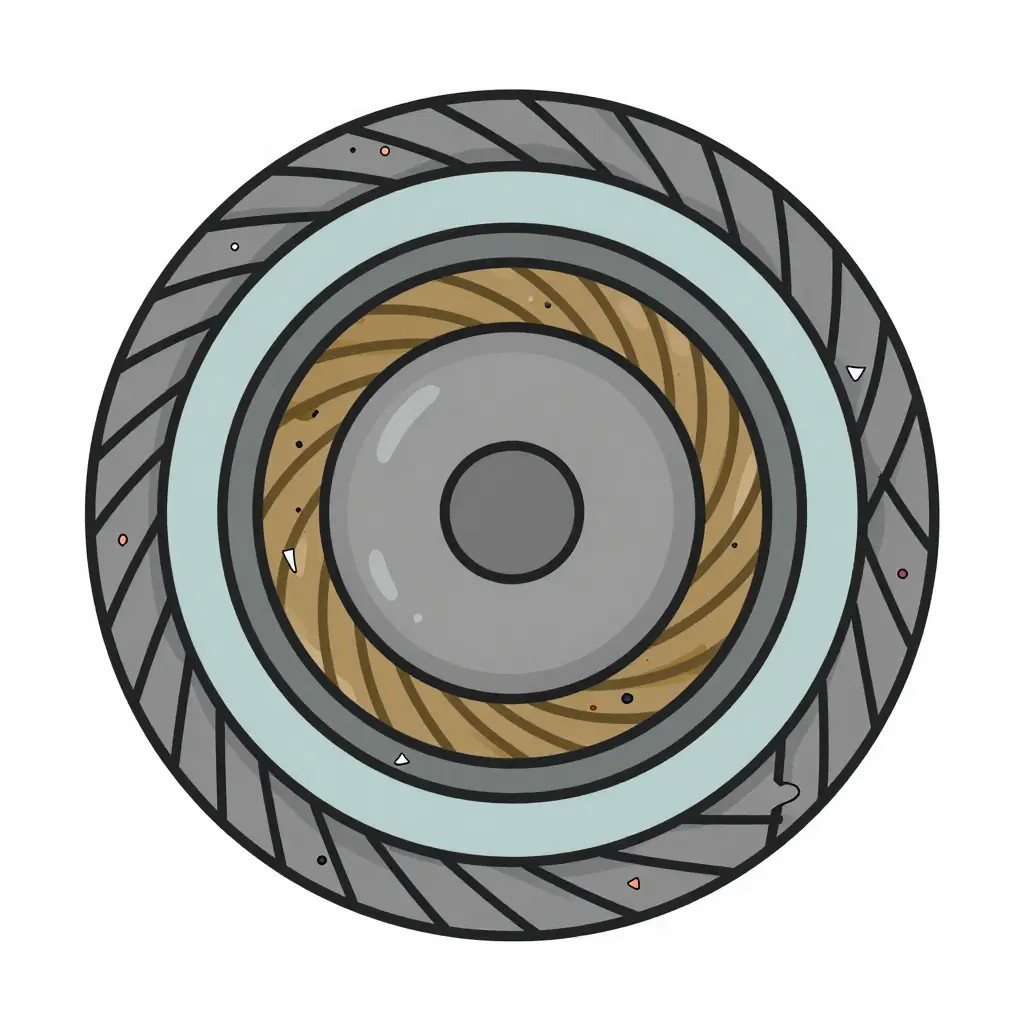
Layers of strands wrap a central core, leaving thin gaps where grit and lubricant collect. In arid climates that trapped grit is what drives the wear, so the maintenance that matters happens between the layers, not just on the surface.
Because the environment sets the degradation rate, maintenance schedules diverge sharply by region. The table compares five factors for Phoenix tow operations and coastal fleets.
Desert/Phoenix vs. Coastal Conditions: Impact on Winch Cable Life
| Environmental Factor | Desert / Phoenix Conditions | Coastal Conditions | Net Effect on Winch Cable Replacement Frequency |
|---|---|---|---|
| Abrasive particulate exposure | High – airborne dust and silica grit | Low – humid air suspends little grit | Pulls Phoenix replacement rates up sharply |
| Average humidity | Low – annual mean near 37% | High (70-90%) | Dry air slows corrosion, but dust still dominates |
| Salt exposure | Minimal – fully inland | High – airborne salt spray | Raises coastal corrosion-driven replacement |
| Temperature cycling range | Moderate – about 20-25F daily swings | Narrow – mild, stable temps | Cycling works strands against fittings |
| Typical replacement interval (months) | 6-12 | 18-24 | Phoenix fleets replace roughly twice as often |
Grit abrasion outpaces simple corrosion, so coastal fleets can stretch their intervals while arid operations budget for far more swaps. That is the gap the table describes.
Maintenance Practices That Extend Winch Cable Life
A winch cable rarely fails without warning. In arid markets like Phoenix, the difference between a cable that lasts a year and one that quits at six months is usually disciplined tow truck maintenance, not luck.
Inspect the full length of every cable before each shift, and log the result.
That one habit carries the rest. Run the rope under light load and look for broken wires, kinks, crushed strands, and corrosion. Arid damage hides differently than wet damage: dust works between the strands, wicks out lubricant, and turns into grinding paste inside the rope. Phoenix crews should inspect more often than the coastal norm, because grit accelerates fatigue long before rust shows up. Some fleets also log wear trends in predictive-maintenance software to catch problems earlier.
Cleaning and re-lubricating matter just as much. Blow dust out of the strands, then work in a penetrating rope lubricant that reaches the core instead of sitting on the surface. Desert heat and grit break coatings down fast, so reapply more often. Coastal fleets fight a different problem: their cables shrug off grit but corrode from the inside, which makes freshwater rinses and corrosion-inhibiting lubricants worthwhile.
Spooling protects the rope mechanically. Wind cable under load in tight, even layers to avoid crush and slack loops, and never shock-load a slack line.
Keep replacement criteria objective. Pull a cable when broken wires cluster within a strand lay length, when the diameter has visibly shrunk from wear or core collapse, or when deformation makes operation unsafe. Use manufacturer and industry thresholds instead of a visual guess.
Climate changes how often you do these things, not whether. Inspection, cleaning, spooling, and lubrication are what stretch cable life in any region.
The Abrasion Wear Cycle, Visualized
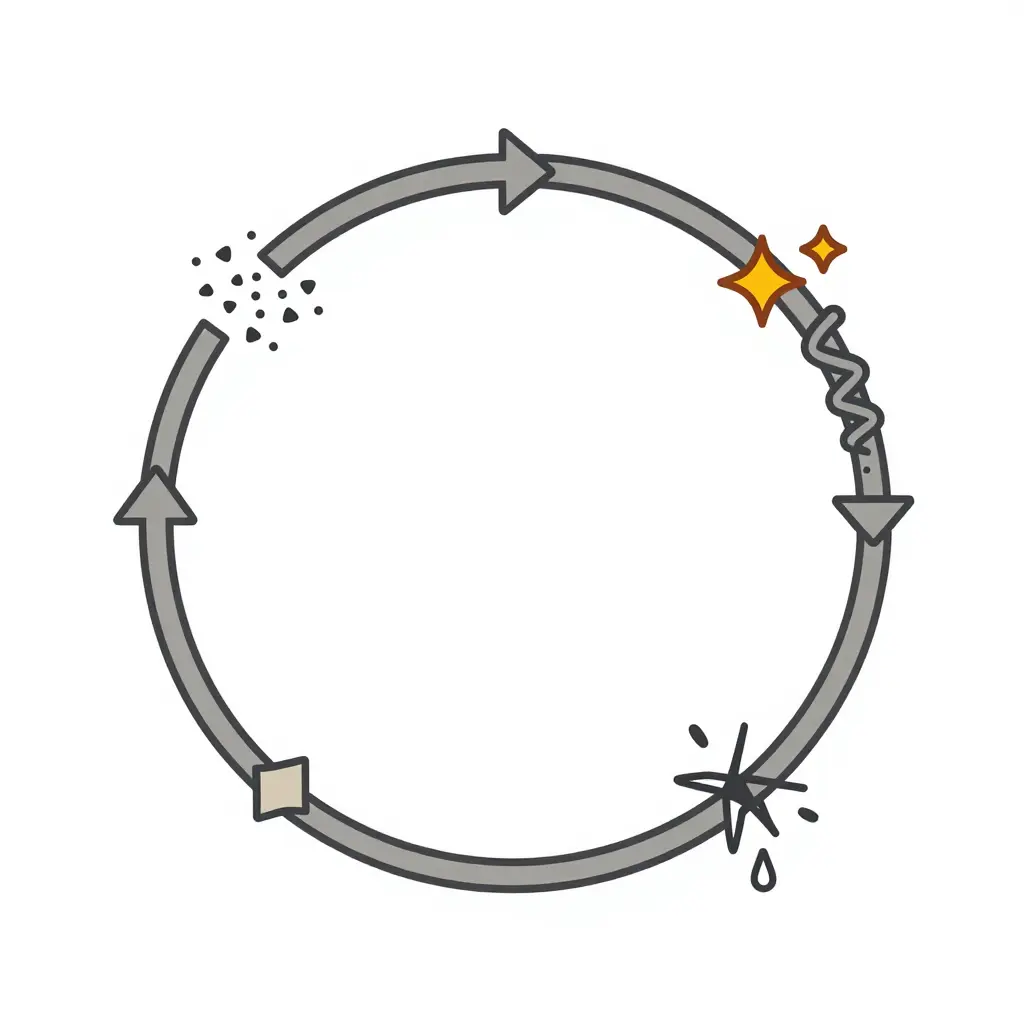
The cycle reinforces itself: grit gets in, strands grind against each other, lubricant is lost, fatigue accelerates, and each stage feeds the next until the cable fails. Break one link – as Phoenix tow truck companies can by cleaning and re-lubricating right after a dusty recovery – and the whole loop slows.
Train operators to spot these signs on the pre-shift walkaround, because catching a cable before it snaps is the cheapest saving in tow truck maintenance:
- Broken outer wires: a few snapped wires along the outer strands signal fatigue from repeated load cycles. Each break cuts the cable’s rated strength and raises the risk of a hand injury.
- Diameter reduction: a cable measuring thinner than spec has begun to collapse at the core and inner strands, which quietly lowers the safe working load limit.
- Flat spots: flattened or crushed sections form when the cable is pinched by a sheave, drum, or block, and these weak points can fail suddenly under full tension.
- Kinks and birdcaging: sharp bends or bulging, separated strands mean the internal structure is permanently distorted, so the cable can no longer spread load evenly across its wires.
- Corrosion pitting: rust pits eat into the metal surface and seed cracks, and in arid regions blowing grit speeds up the abrasion that exposes fresh steel to moisture.
- Lubricant loss: a dry, bare cable has lost the protective film guarding against corrosion and internal friction, letting strands grind against one another from the inside out.
- Localized thinning near the drum fitting: wear concentrated at the termination or drum end means contact pressure is eating the cable where it bends most, a common precursor to end failure.
Dust, UV, and heat make all of these conditions worse in Phoenix, so schedule replacement by inspection interval rather than waiting for a cable to fail mid-recovery. Regional practices are compared in this guide to tow truck fleet maintenance in Phoenix.
Cost and Operational Implications of Frequent Winch Cable Replacement
Replacing a cable twice as often costs more than the cable. Parts, labor, downtime, and lost jobs stack up into a higher operating baseline.
Direct replacement costs
Steel winch cable and synthetic line are a recurring purchase. Desert dust, UV, and heat accelerate strand fatigue, so procurement volumes run roughly double what a coastal fleet buys. Bulk pricing lowers the unit cost but not the frequency.
Labor and downtime
A technician has to remove the old cable, spool and tension the new one, and verify drum alignment. Doing that twice as often eats productive bay hours. The hidden cost is downtime: every hour a truck sits idle is an hour it cannot generate revenue.
Lost towing jobs
An idle truck turns down calls, and those calls go to a competitor – often for good. For tow fleet managers, unbooked work usually costs more than parts and labor combined, especially during peak demand.
Safety and liability exposure
A worn cable can fail suddenly under load and injure someone or damage a vehicle. More frequent inspection and replacement lower that risk at a cost. Liability and insurance exposure can outweigh whatever you save by stretching cable life.
Fleet durability and total cost of ownership
Equipment durability drives total cost of ownership. Shorter component life means paying more per mile and per job, and any calculation of investing in tow trucks has to account for that up front. Over several years, a Phoenix operator carries a structurally higher TCO than a coastal one unless the equipment is specified for the environment.
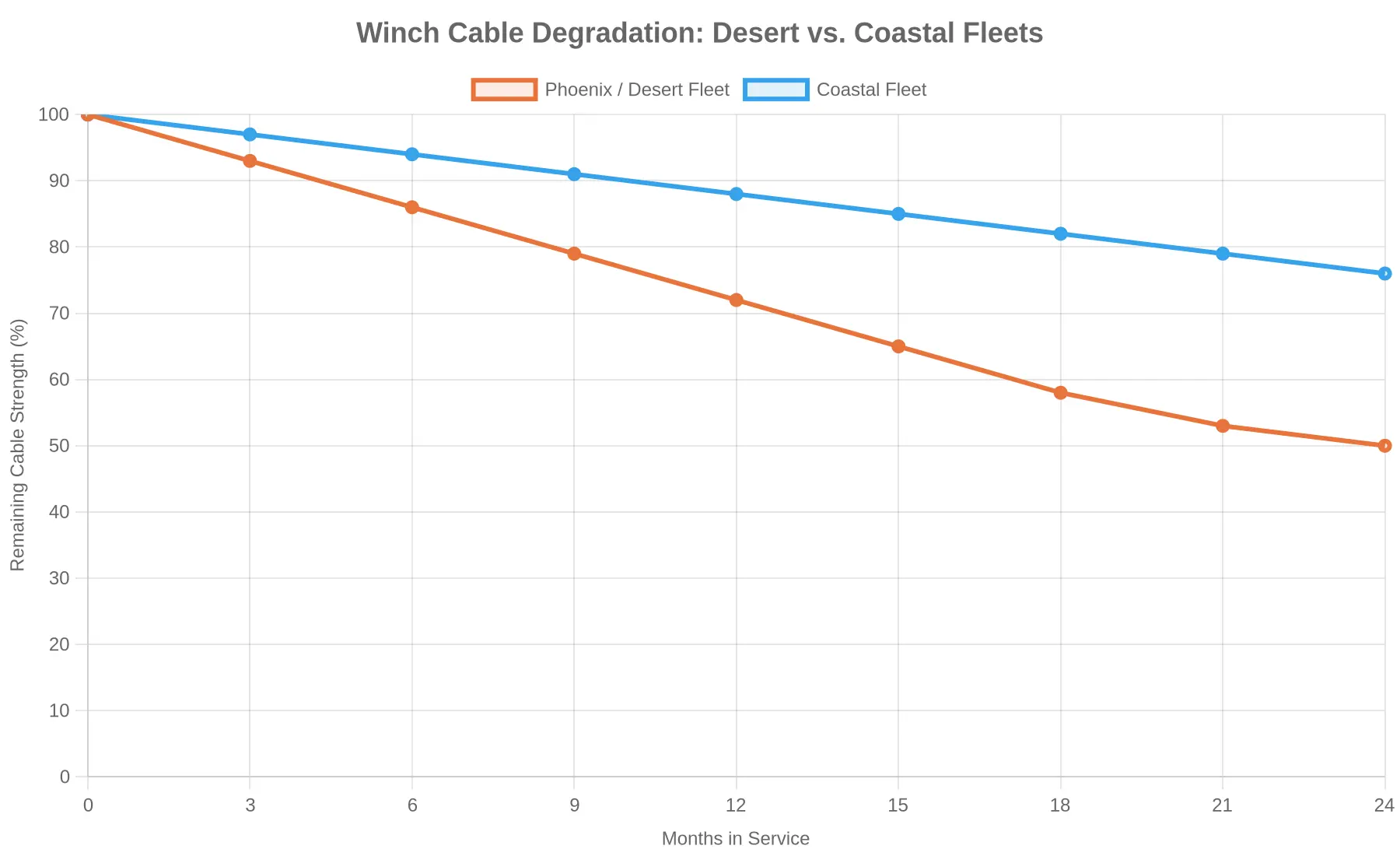
Caption: Estimated remaining winch cable strength (%) over 24 months in service – Phoenix/desert fleet versus coastal fleet.
Over two years the Phoenix line falls about twice as fast as the coastal line, ending near 50% remaining strength at 24 months against roughly 76% for the coastal fleet. That steeper decline matches the roughly 2:1 replacement ratio operators report, a pattern covered in our guide to running tow trucks in Phoenix.
Best Practices for Extending Winch Cable Life in Arid Regions
Desert conditions shorten the life of every cable in the fleet. Dust, UV, and triple-digit heat hit the wire rope and its lubricant at the same time, which is why Phoenix tow truck companies cycle through cables about twice as fast as coastal operators. The chart below puts numbers on that gap.
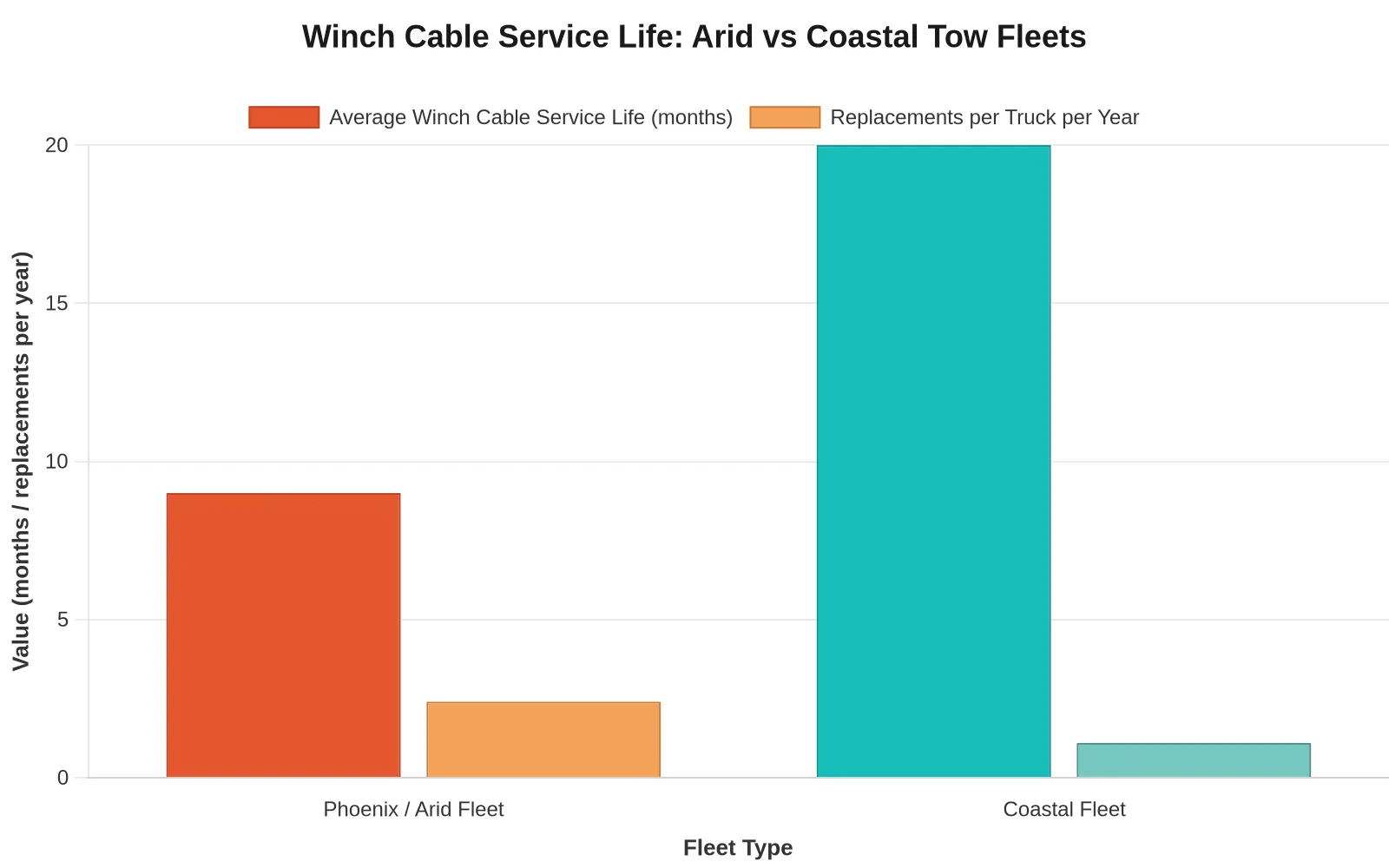
For tow fleet managers, closing that gap comes down to five practices.
Tie Inspection Schedules to Desert Conditions
Inspection intervals written for mild, humid coasts are too long here. Dust works into the strands while heat speeds up fatigue and corrosion.
Recommendation: Inspect every active winch cable weekly, and shift to daily inspection once a cable reaches 60 percent of its rated service life.
Look and feel for broken outer wires, kinks, corrosion, and any loss of diameter, and write down what you find. That record is what makes condition-based decisions possible.
Control Dust and Abrasive Contamination
Desert dust works like grinding paste between the wire strands. Cleaning it out on a routine removes the abrasive before it does lasting damage.
Recommendation: Wipe and dry each cable after every dusty deployment, and never spool a cable that is coated in grit.
Cover winches when they are idle, park equipment away from active dust, and use clean, filtered wash water. Few maintenance habits pay back as well as keeping grit out.
Select Lubricants for High Heat and UV
Standard grease thins and slings off in desert heat, leaving the wire exposed to UV and trapped moisture.
Recommendation: Use a high-temperature, UV-stable wire rope lubricant rated for continuous 250F-plus service, and reapply it on a fixed cycle rather than waiting for visible dryness.
Thin-film penetrants reach the core; heavier dressings shield the outer strands. Pick the product for the environment, not the price tag.
Enforce Spooling Discipline
Uneven spooling cross-winds and crushes strands, weakening them well below rated capacity.
Recommendation: Train every operator to spool under tension in neat, even layers, and re-spool any cable that crosses or bunches before the next lift.
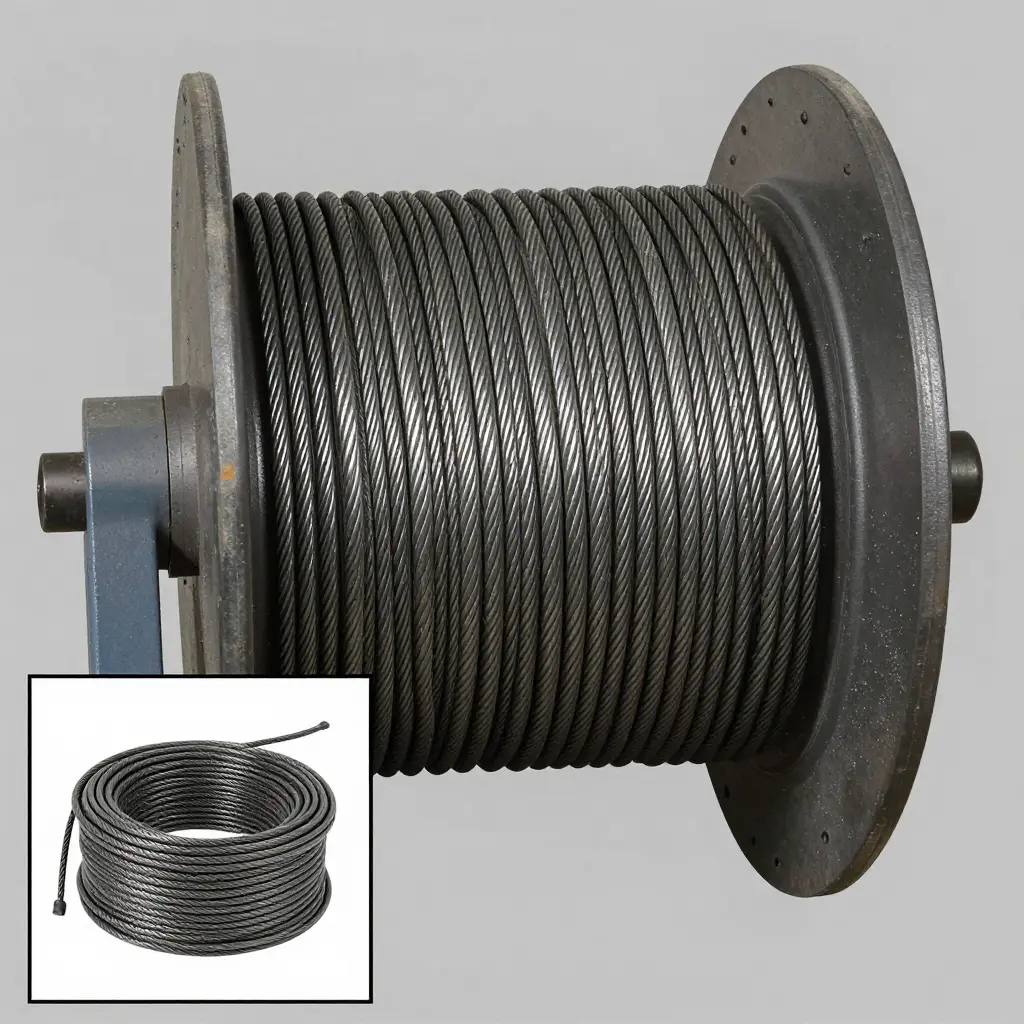
Spooling under tension spreads the load and avoids the sharp bends that start failures early. The illustration below contrasts correct layering with a crossed, bunched drum.
Replace on Condition, Not the Calendar
Replacing by the calendar discards good cable and leaves bad cable in service.
Recommendation: Retire a cable the moment it hits any defined threshold – 10 randomly distributed broken wires in one lay, a 5 percent diameter reduction, or visible core protrusion.
Defined thresholds replace guesswork with a standard that protects both the equipment and the operator.
Quick-Reference: Arid Inspection Intervals
| Cable Age | Inspection Frequency | Primary Focus |
|---|---|---|
| 0-60% of service life | Weekly | Broken wires, lubrication, spooling |
| 60-85% of service life | Daily | Diameter loss, core condition, corrosion |
| 85%+ or post-incident | Before every use | Threshold limits, retirement review |
Quick-Reference: Lubricant Selection
| Factor | Arid-Region Target | Why It Matters |
|---|---|---|
| Heat rating | 250F+ continuous | Prevents sling-off and dry strands |
| UV stability | High | Resists breakdown from intense sunlight |
| Dust resistance | Penetrating, tacky film | Blocks abrasive ingress between strands |
Run all five together and cable maintenance stops being guesswork.
Frequently Asked Questions
Why do Phoenix fleets replace winch cables so much more often than coastal fleets?
Phoenix fleets replace cable about twice as often as coastal fleets because the desert attacks the wire rope from several directions at once. Strong ultraviolet light, day-to-night temperature swings, and airborne grit all degrade the wire and the lubricant around it, and the combined effect cuts service life sharply. Local operators’ approach is covered in our guide to Phoenix tow truck companies.
Does salt exposure matter less than dust abrasion?
Salt and dust damage cable in different ways, so neither wins outright. Coastal fleets fight salt-driven corrosion on the outer strands; desert dust drives silica deep between the wires and grinds from the inside. In practice, that internal abrasion tends to shorten cable life faster than surface rust does.
How often should winch cables be inspected in desert climates?
Before every shift, with a more detailed examination at least weekly – far more often than the monthly checks used in mild climates. Running a rag along the rope quickly turns up broken wires and grit buildup that warn of imminent failure. Staying on that schedule is the cheapest way to avoid a snapped cable mid-recovery.
Can switching cable construction or material extend replacement intervals?
Yes. Galvanized wire rope, compacted-strand construction, and high-grade synthetic line resist corrosion and shed grit better than standard bright wire rope, and they can meaningfully extend the intervals between replacements. But material alone does not fix the underlying problem: unless tow truck maintenance covers cleaning and lubrication, even premium cable wears fast in the desert.
What is the single biggest driver of winch cable wear in arid regions?
Abrasive dust working into the strands and the drum. Every layer of trapped sand acts like sandpaper each time the cable spools in and out during a tow. That constant internal friction, far more than heat or UV alone, is what pushes Phoenix fleets to replace cable so much earlier than their coastal counterparts.
Do coastal fleets get a genuine durability advantage overall?
They avoid the worst of the dust abrasion, so their cables often last longer between replacements, but they trade that gain for persistent salt corrosion. The lesson for desert operators is that prevention through disciplined tow truck maintenance and prompt winch cable replacement beats waiting for visible damage.
The Takeaway: Why Phoenix Fleets Burn Through Cables Faster
Phoenix tow operators replace winch cables roughly twice as often as coastal fleets, and corrosion is not the reason.
Coastal operations do fight salt and moisture, but desert conditions hit from three sides. Abrasive dust works between the wire strands and grinds them from the inside. Heat breaks down the lubricant and leaves strands dry and brittle. UV then degrades both the lubricant film and the protective coatings that would otherwise slow the wear. Those forces bend a slow, predictable wear curve into a steep one.
Maintenance Strategies That Narrow the Gap
No one can change the climate, only the response to it. Fleets that close the replacement gap tend to share a few habits:
- Rinse and dry cables after heavy dust exposure to flush out trapped grit.
- Reapply lubricant on a shorter interval than coastal maintenance schedules recommend.
- Inspect for broken strands, kinks, and flat spots during every pre-shift check.
- Replace cables on a schedule tied to load cycles, not just to visible damage.
Each habit targets one of the mechanisms that define desert conditions.
The Economics of Proactive Replacement
Waiting for a cable to break is the most expensive route. A snapped cable during a recovery can damage vehicles, injure people, and tie up a truck – costs that dwarf the price of the cable itself. Proactive winch cable replacement turns that emergency into a planned line item. For fleet managers comparing regions, this is the heart of fleet durability: matching service intervals to the environment instead of following a one-size-fits-all manual.
In Phoenix and similar arid markets, shorten the winch cable replacement interval, relubricate aggressively, and treat dust, heat, and UV as the primary threats, not corrosion.
As towing operations spread across more climates, the advantage goes to fleets that treat winch reliability as a region-specific engineering problem, tuning maintenance to each environment so cables hold up whether the ground is salt-soaked or sun-baked.